Padrão do Salado: Guimarães' Gothic Victory Monument
A medieval victory monument commissioned by a king but completed by a local merchant, the Padrão do Salado stands as a powerful symbol of historic Guimarães. The dual origins of the structure—a royal stone canopy sheltering a privately donated cross—highlight a unique blend of royal power and civic wealth in the 14th century.
A Royal Commemoration of the Battle of Salado
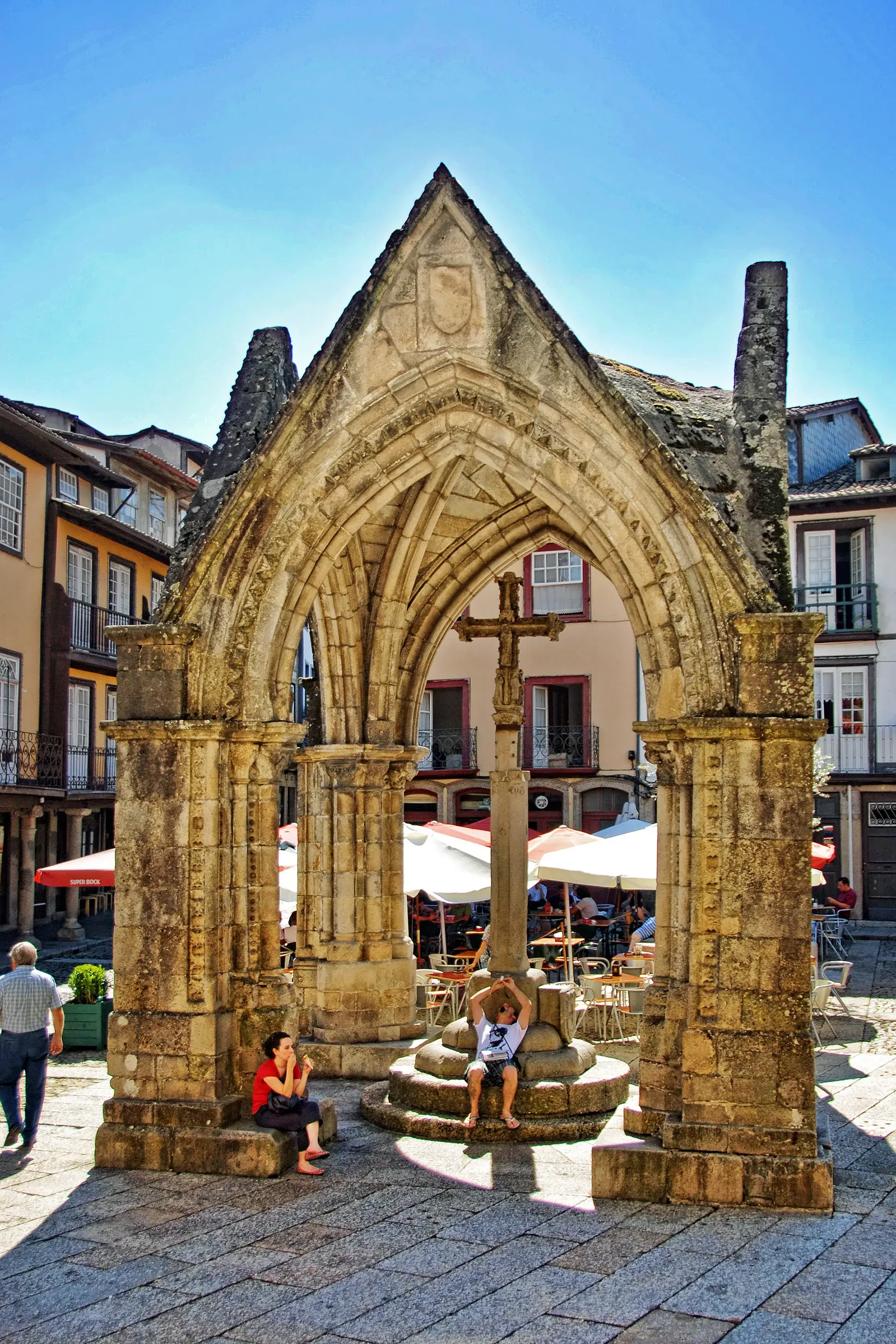
Built between 1340 and 1342, this open-air Gothic shelter was ordered by King Afonso IV of Portugal. It serves as a royal votive offering following the decisive 1340 Battle of Salado.
During this major conflict near Tarifa, allied Portuguese and Castilian forces defeated the combined Marinid and Nasrid armies. The victory was deeply historically significant, successfully halting the final major North African Muslim offensive on the Iberian Peninsula.
Striking Gothic Architecture and Civic Wealth
Classified as a National Monument in 1910, the structure features a vaulted stone canopy supported by four pointed arches. The heavy, weathered gray granite masonry of these outer arches creates a stark textural contrast with the finer, smoother details of the monument's centerpiece.
Beneath the royal canopy rests a double-faced limestone cross, added in 1342 by a wealthy Lisbon-based Guimarães merchant named Pero Esteves. The intricately carved cross depicts Christ Crucified on one face and the Virgin Mary with Child on the reverse. Its supporting shaft features the Portuguese royal coat of arms alongside sculpted figures of saints, including Saint Vincent, Saint Philip, Saint Torcato, and a Guardian Angel.
Although the limestone cross appears bare today, it was originally decorated with vibrant polychrome paint and plated in gold. For centuries, protective iron fencing enclosed this central cross, remaining in place until the early 20th century.
Legends of the Norman Cross and the Olive Tree
Local historical accounts often refer to the central centerpiece as a "Norman cross." This stems from a tradition suggesting that the merchant Pero Esteves imported it from or had it carved in Normandy.
A popular local legend surrounds the monument's 1342 installation. According to tradition, a withered olive tree standing in the square miraculously sprouted fresh leaves and bore fruit just three days after the cross was placed. This mythical event prompted the rededication of the adjacent church and the plaza to Nossa Senhora da Oliveira.
The Center of Medieval Guimarães
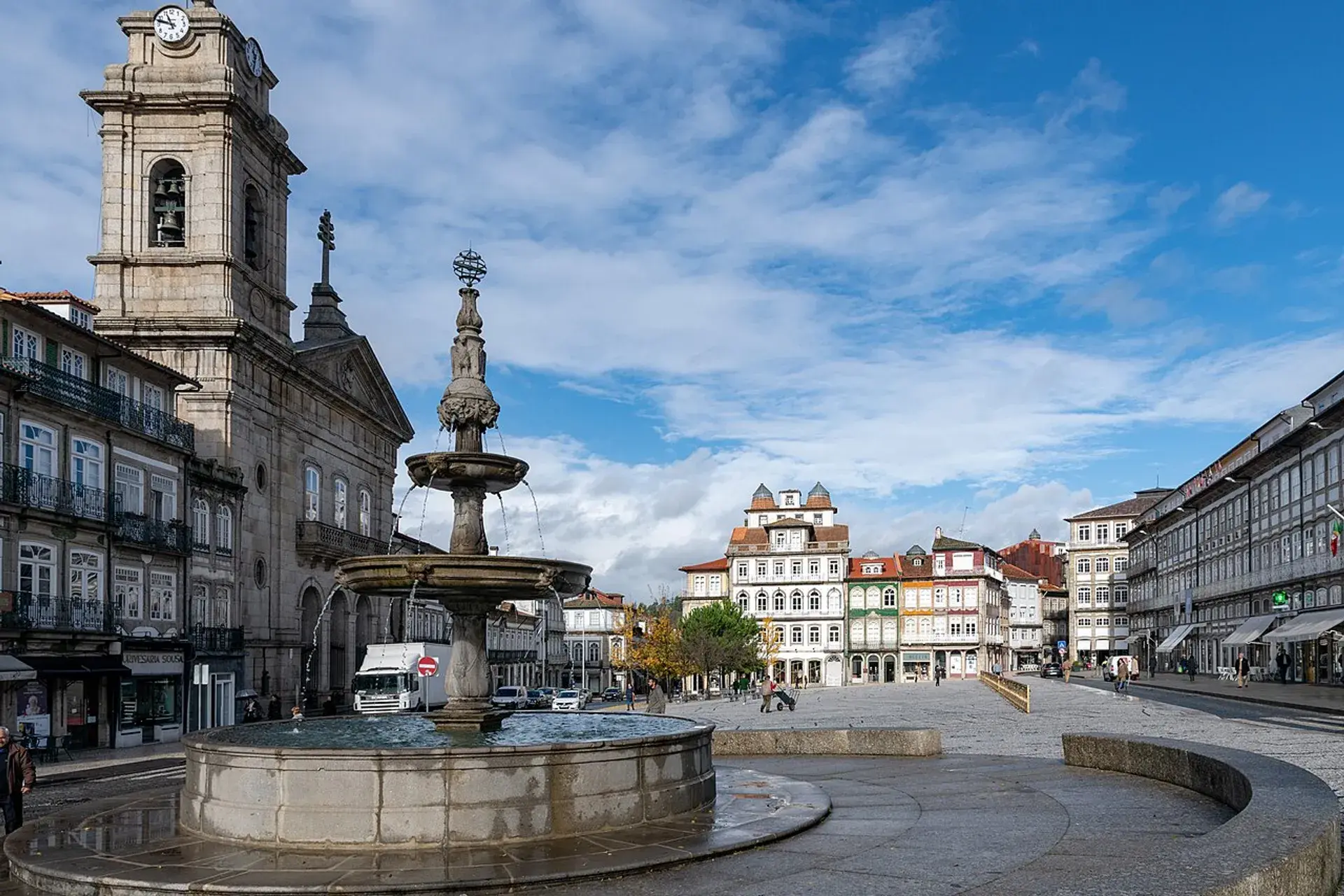
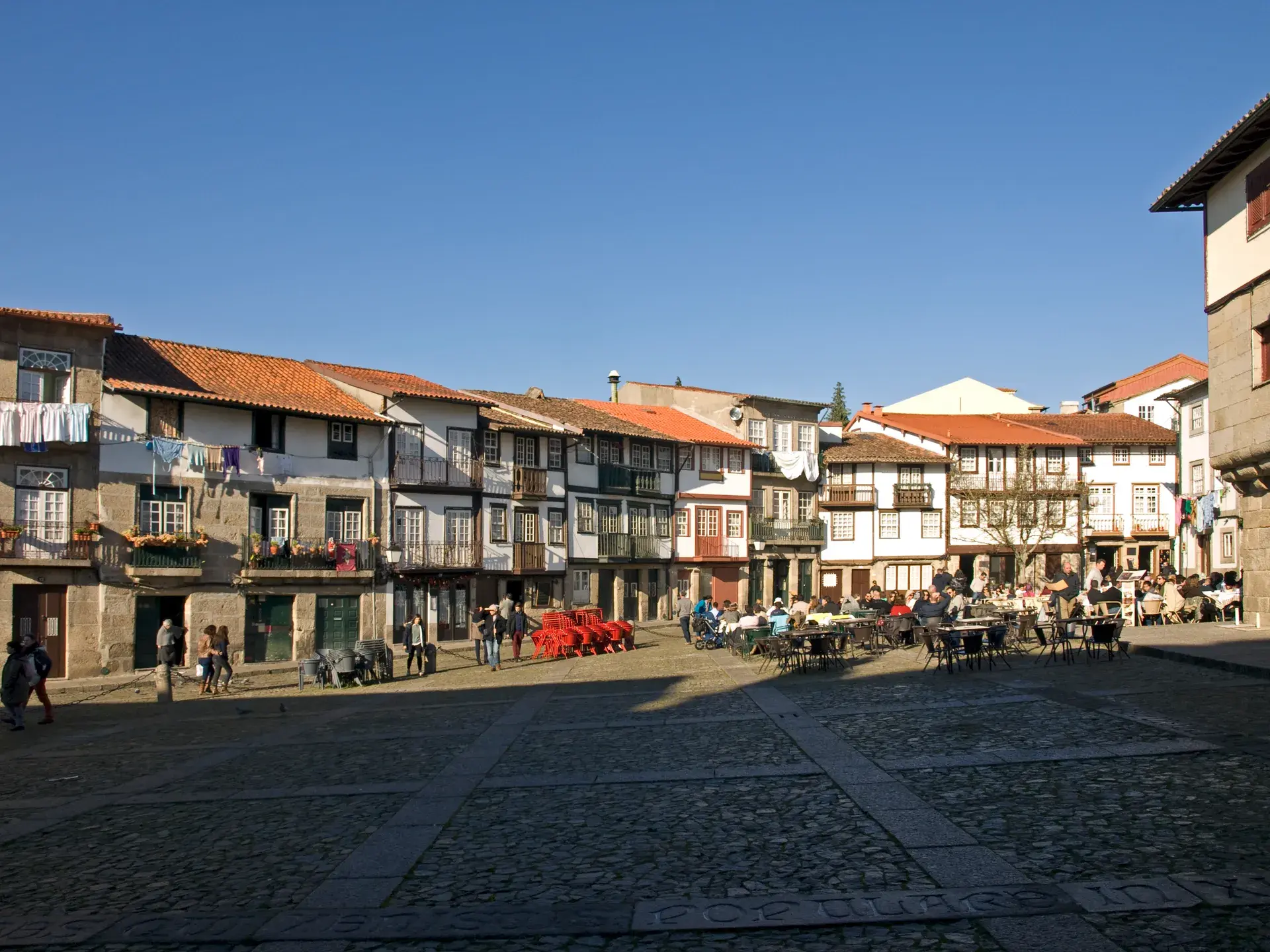
Today, the Padrão do Salado operates as an open historic landmark anchoring Largo da Oliveira, a pedestrianized square that originally developed around a 10th-century monastery.
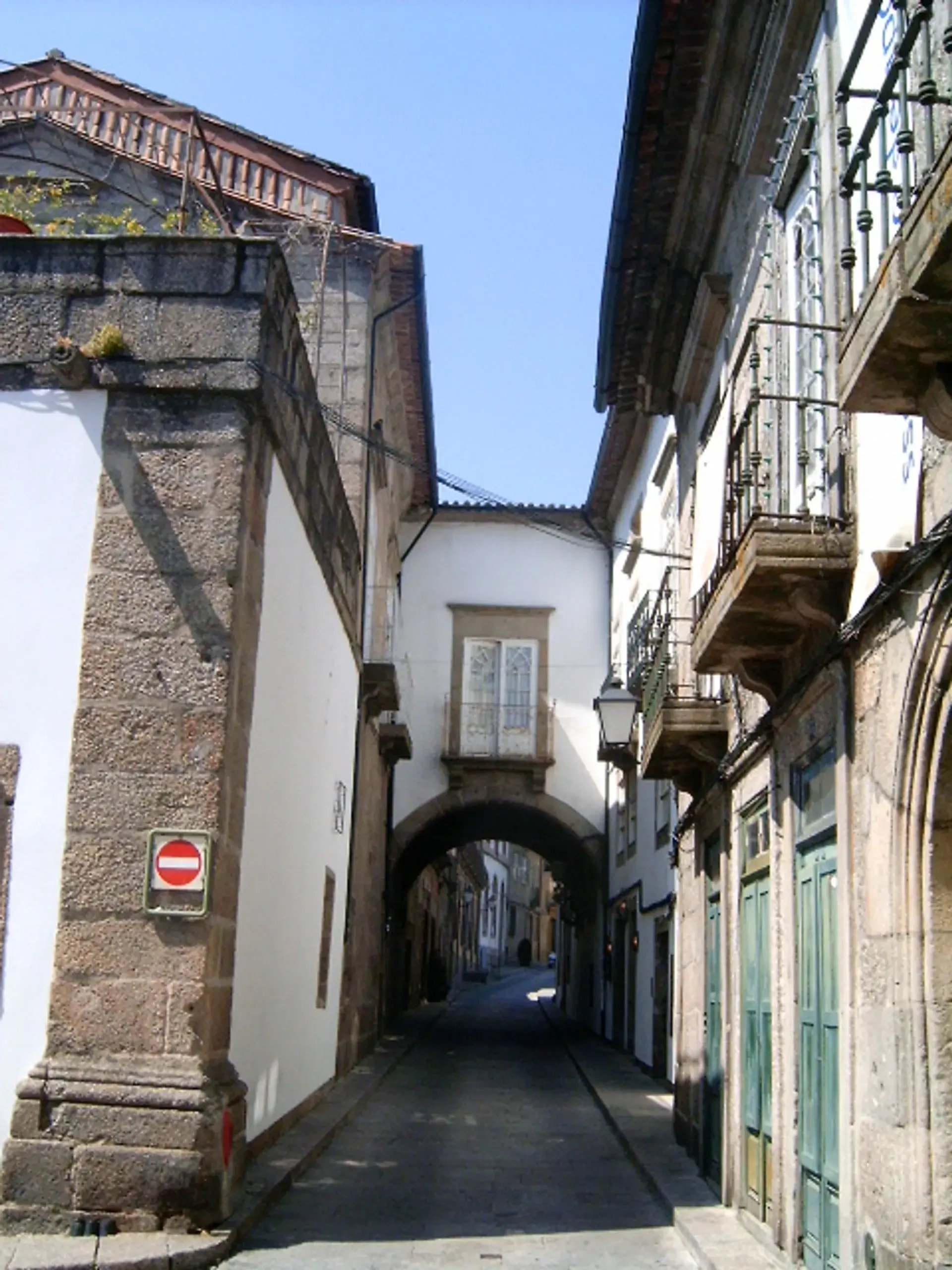
The plaza serves as a lively civic gathering point, bordered by outdoor café terraces. The monument acts as a central hub connecting the city's upper medieval castle district with its lower interconnected historic squares.
FAQ
Why was the Padrão do Salado built?
King Afonso IV commissioned the monument as a royal votive offering to commemorate the Christian victory at the 1340 Battle of Salado, which halted the last major North African Muslim offensive on the Iberian Peninsula.
What does the central cross of the Padrão do Salado depict?
Donated by merchant Pero Esteves in 1342, the double-faced limestone cross depicts Christ Crucified on one side and the Virgin Mary with Child on the other. Its supporting shaft features carved saints and the Portuguese royal coat of arms.
How did Largo da Oliveira get its name?
According to local legend, a withered olive tree in the square miraculously sprouted leaves and fruit three days after the monument's cross was installed in 1342. This led to the renaming of the plaza and the adjacent church to honor the olive tree.