Praça de São Tiago: Guimarães' Medieval Hub
Immerse yourself in the lively atmosphere of this charming medieval square lined with historic timber-framed buildings.
A Medieval Merchant Quarter
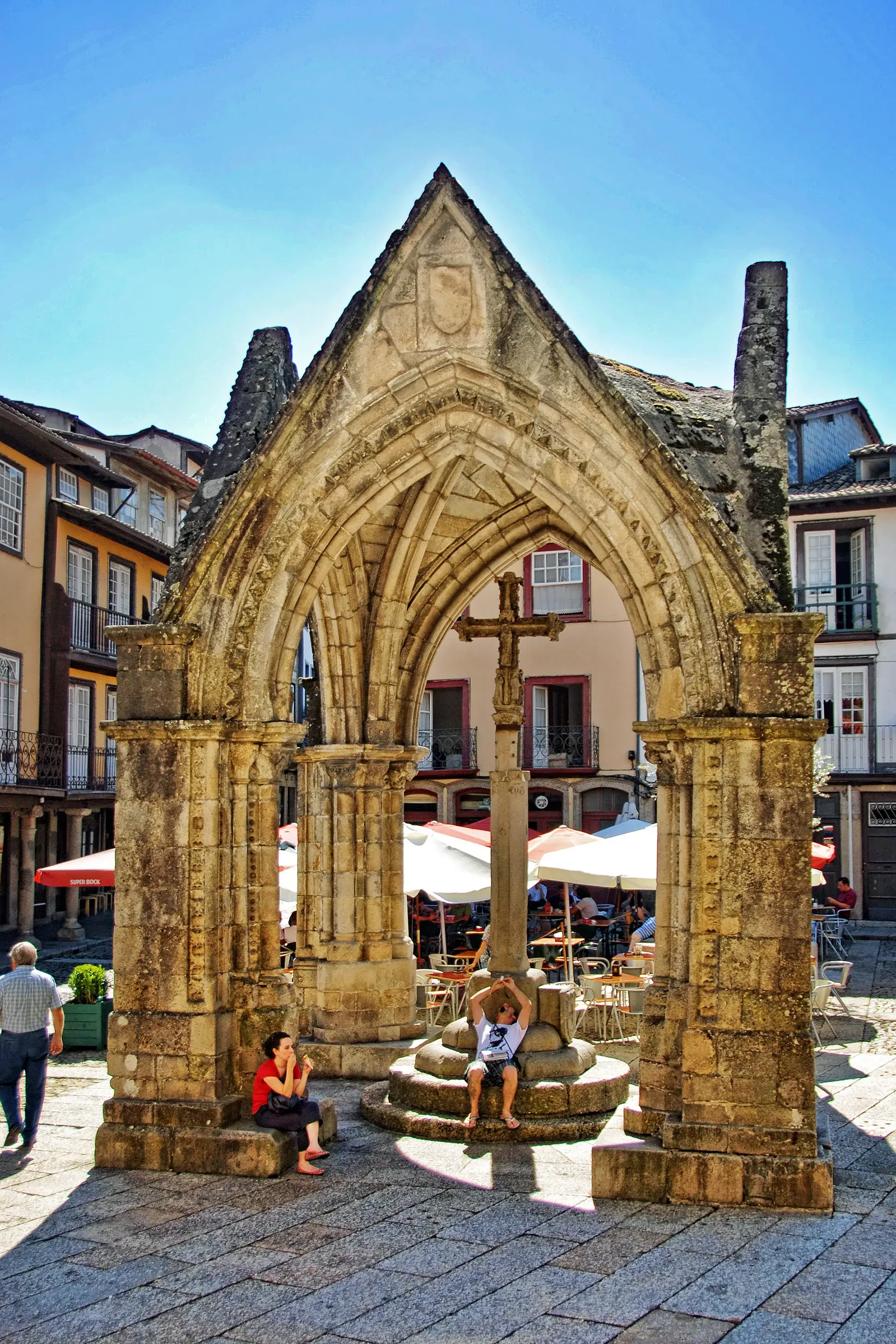
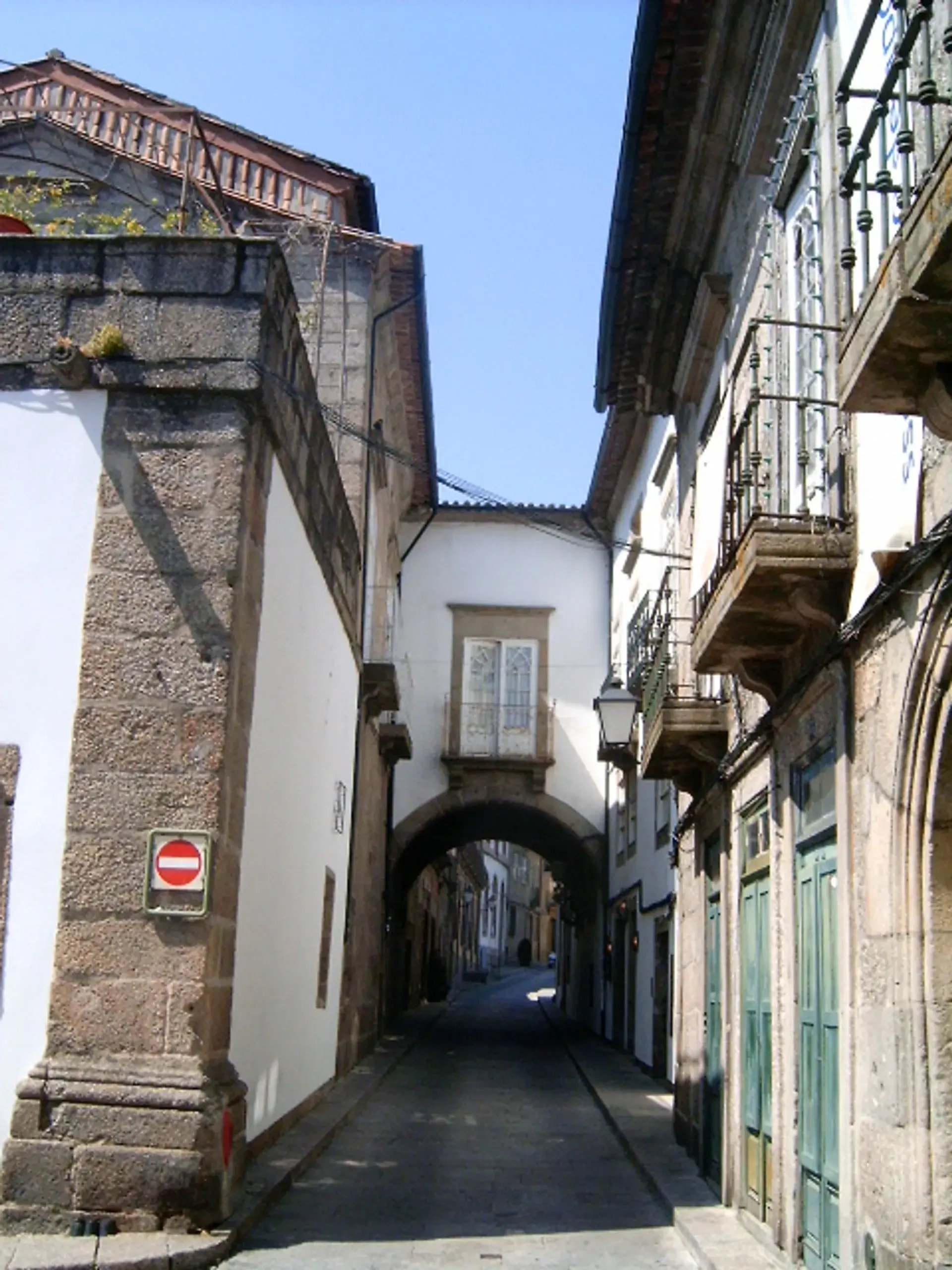
Praça de São Tiago serves as a historic anchor of the lower medieval burgh in Guimarães, linking the city's administrative civic center to historic pilgrim and merchant routes. Its origins date back to the late 11th century when Frankish merchants, artisans, and soldiers accompanying Count Dom Henrique settled in this sector. This established a thriving commercial quarter that remains a central focal point of the city today. The square connects directly to the neighboring Largo da Oliveira beneath the gothic stone arcade of the former council chambers, known as the Antigos Paços do Concelho.
Architectural Heritage and Restoration
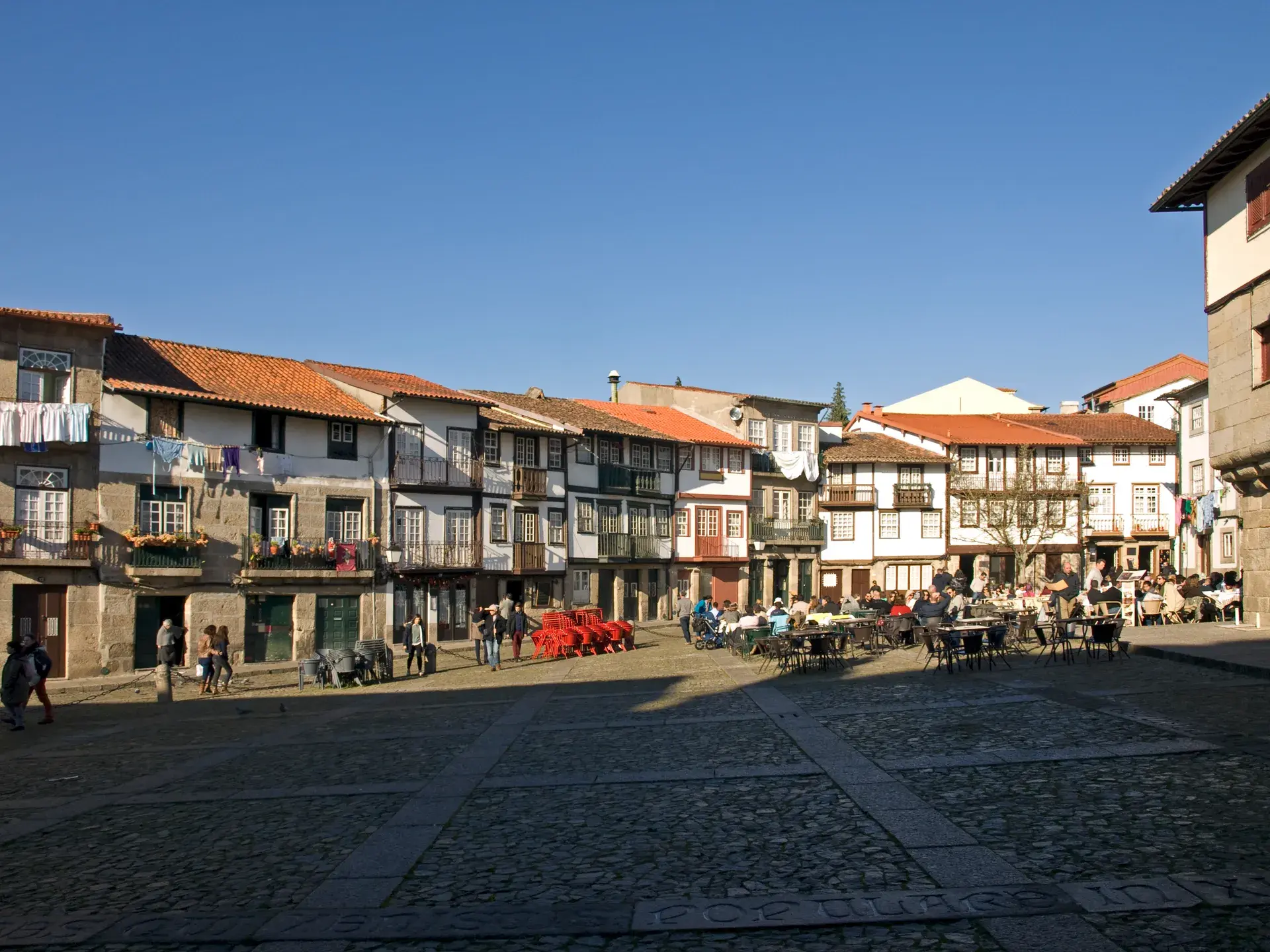
The perimeter of Praça de São Tiago is defined by preserved 17th- and 18th-century multi-story houses. These striking buildings feature granite ground floors, half-timbered upper levels, and traditional wooden balconies. The visual contrast of weathered dark timber overhangs and bright flowerboxes against rough-hewn granite walls gives the square its distinct character.
Interestingly, the square was largely omitted by early 19th-century photographers, who viewed its dense timber homes as unhygienic and unrefined compared to Guimarães' newer neoclassical developments. After facing expropriation projects due to decay, the medieval facades were ultimately saved and restored during late 20th-century municipality-led heritage rehabilitations, securing its place as an integral part of the UNESCO World Heritage Site.
Pilgrim Footprints and Legends
As a designated stop along the Camino de Santiago, Praça de São Tiago holds a deep connection to pilgrim history. A 17th-century porched chapel dedicated to the Apostle Saint James once stood here. Although the structure was demolished in the late 19th century, its original footprint is still visibly outlined in the stone pavement. According to local legend, the Apostle Saint James himself brought a statue of the Virgin Mary to Guimarães and placed it inside a pagan temple that originally stood on this ground, giving the square its name.
Another historic detail is inscribed directly into the stone paving. The square features a Latin phrase from Count Dom Henrique's 1096 charter: "Ad vos homines qui venistis populare in Vimaranes et ad illos qui ibi habitare volerint," which translates to, "To you, men who came to populate Guimarães and to those who want to live here."
A Modern Social Hub
Today, Praça de São Tiago functions as a lively pedestrian center. The tightly enclosed space features excellent acoustics and is heavily populated with outdoor cafe, bar, and restaurant terraces patronized by both locals and visitors. In addition to its dining and social scene, the square provides visitor services; the official municipal Tourist Information Office is housed inside the rehabilitated former stables of the Casa do Arco.
FAQ
What happened to the chapel in Praça de São Tiago?
A 17th-century porched chapel dedicated to Saint James once stood in the square. It was demolished in the late 19th century, but its original footprint remains visibly outlined in the stone pavement today.
Why was the square excluded from early photographs?
During the 19th century, early photographers deliberately avoided the square, viewing its dense timber homes as unrefined and unhygienic compared to the city's newer neoclassical developments.
What does the Latin inscription on the pavement mean?
The stone pavement features an inscription from Count Dom Henrique's 1096 charter, which translates to: "To you, men who came to populate Guimarães and to those who want to live here."