Rua de Santa Maria: Guimarães' Oldest Street
Rua de Santa Maria is recognized as the oldest street in Guimarães, with historical documents referencing it as early as the 12th century. Operating as the central medieval axis, it connects the lower historic town to the upper historic quarter. Today, it forms a fundamental spine of the UNESCO-inscribed Historic Centre of Guimarães, a city celebrated as the Cradle of the Portuguese Nation.
A Medieval Link
The route originated in the 10th century to connect the city's two founding poles: the defensive castle on Monte Latito and the monastery established by Countess Mumadona Dias in the lower valley. When fortifications were later constructed to enclose both settlements, Rua de Santa Maria remained the primary artery between the upper stronghold and the civic core. Its upper stretch was historically known as Rua da Infesta.
Historic Architecture and Elite Residences
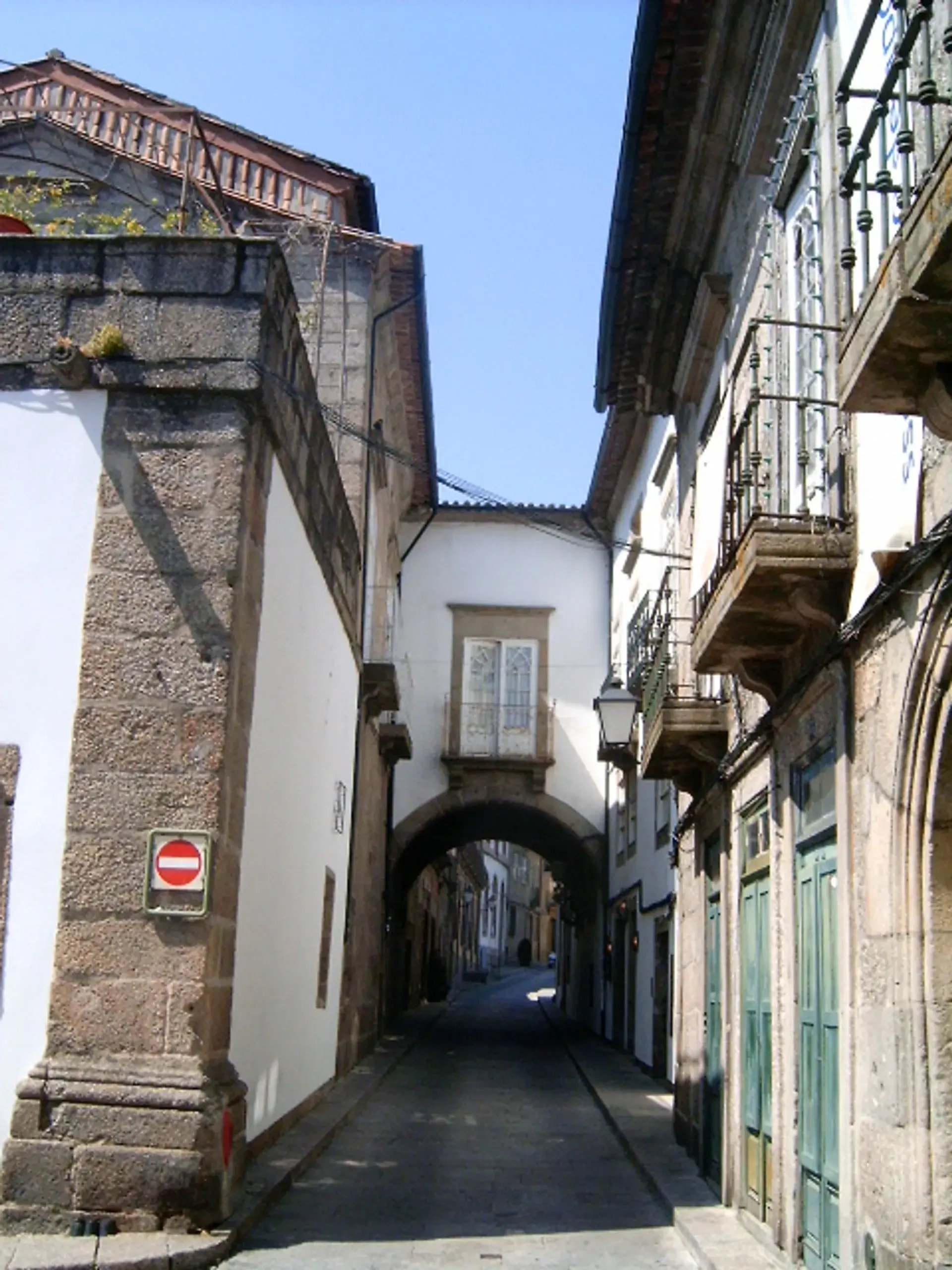
From the Middle Ages through the 18th century, Rua de Santa Maria was the preferred residential quarter for the city's elite, including nobles, high-ranking clergy, and prosperous merchants. The narrow pedestrian corridor is defined by rough, weathered granite facades, carved wooden eaves, and ornate wrought-iron balconies adorned with flower pots.
Several prominent landmarks survive from this era. The preserved 15th-century Casa Gótica dos Valadares and the 18th-century Casa dos Peixotos stand as examples of early noble townhouses. Nearby, the wealthy 16th- to 17th-century Convento de Santa Clara features a Baroque facade and a two-story cloister; today, the former convent houses the Guimarães City Council.
The Iconic Casa do Arco
The street is visually marked by the overhead stone arch of the Casa do Arco, which frames views along the ascending cobblestones. This 15th-century residence boasts a notable royal history. King Manuel I stayed at the property following his pilgrimage to Santiago de Compostela. The residence later hosted King Miguel I and the 19th-century French-Portuguese painter Auguste Roquemont.
Modern Life and Local Traditions
Fully pedestrianized and paved in traditional stone cobbles, Rua de Santa Maria blends historical preservation with active daily life. Rehabilitated heritage buildings now house residential apartments, artisan craft shops, and small bakeries selling traditional convent sweets.
The street also holds a central place in the city's academic culture. It is home to Casa da Senhora Aninhas, historically recognized as the home of the symbolic mother and protector of the students of Guimarães. During the annual Nicolinas student festivities, the street serves as one of the traditional stops where the Pregão proclamation is declaimed.
FAQ
What is the oldest street in Guimarães?
Rua de Santa Maria is recognized as the oldest street in Guimarães, with historical documents referencing it under this name as far back as the 12th century.
What are the main historic landmarks on Rua de Santa Maria?
Prominent landmarks include the 15th-century Casa do Arco, the 15th-century Casa Gótica dos Valadares, the 18th-century Casa dos Peixotos, and the 16th- to 17th-century Convento de Santa Clara, which currently houses the Guimarães City Council.
Who has stayed at the Casa do Arco?
King Manuel I stayed at the Casa do Arco following his pilgrimage to Santiago de Compostela. The 15th-century residence also hosted King Miguel I and the 19th-century French-Portuguese painter Auguste Roquemont.
Does Rua de Santa Maria have any local academic traditions?
Yes, the street houses Casa da Senhora Aninhas, known as the home of the symbolic protector of Guimarães students. It is also a traditional stop for the Pregão proclamation during the annual Nicolinas student festivities.