Porta do Burgo: Guimarães' Medieval Wall Gateway
A defensive perimeter was once so vital to Guimarães that the city tore down its own newly built convents, including São Domingos and São Francisco, just to clear a path for the stone walls. Today, gazing at the ancient stone structure of Porta do Burgo offers a tangible reminder of the city's medieval fortifications and the immense effort required to build them.
Unifying a Divided City
Guimarães originally developed as two distinct settlements. An upper town formed near the castle, tied to royal and military power, while a lower town centered around the church and local commerce. Between 1265 and 1318, Kings Afonso III and Dinis constructed a two-kilometer defensive circuit to enclose both areas. This massive fortification required eight or nine gates. Historical records indicate these entrances served specialized functions, ranging from noble royal entries to dedicated market and trade connections.
In the 14th century, King João I officially unified the town by ordering the dismantling of the internal dividing wall. The outer fortified boundary, however, remained an essential fixture of the city for centuries.
A Surviving Monument
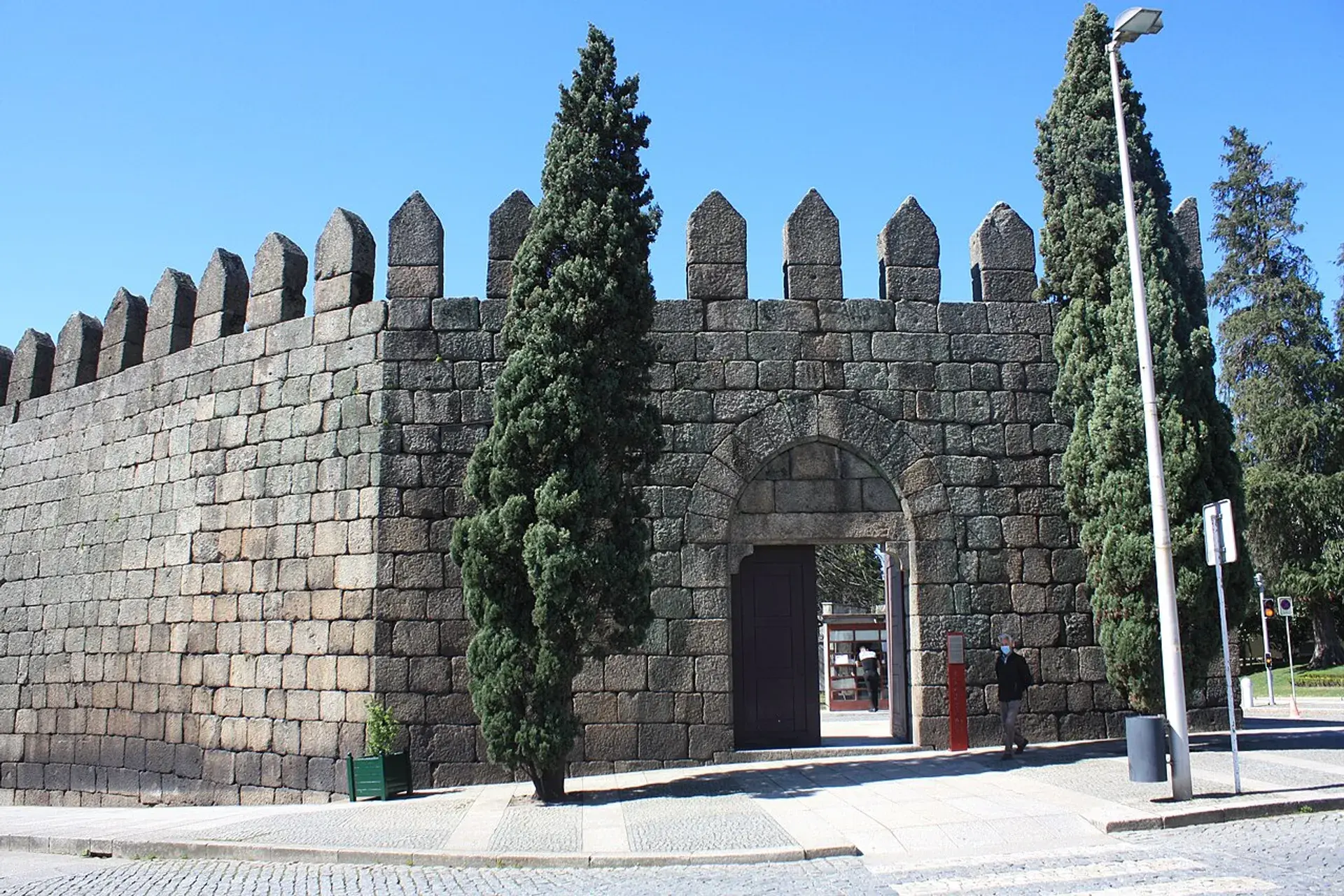
During the 19th and early 20th centuries, the city's defensive rings and most of its gates were demolished to provide building materials and to widen urban roads. The segment running parallel to Avenida Alberto Sampaio survived this period of expansion, leaving Porta do Burgo as the primary standing remnant of the medieval perimeter.
The portal features a heavy stone threshold built with rough-hewn, grey granite masonry. Recognizing its historical value, the Portuguese government classified the structure as a National Monument in 1910. It was later included within the Guimarães UNESCO World Heritage Site in 2001.
The Elevated Walkway
Today, Porta do Burgo functions as an active part of the city's pedestrian infrastructure. The gateway operates as the northern descent point for the Percurso Pedonal no Adarve, a 300-meter elevated walking path situated directly on top of the surviving ramparts.
Located on the classic route connecting the upper and lower towns, the gateway sits directly between the high ground of the Castelo de Guimarães and the lower civic squares. It remains a free, publicly accessible physical marker of the medieval fortified boundary.
FAQ
Where is Porta do Burgo located?
Porta do Burgo is located in Guimarães, integrated into the surviving medieval wall segment running parallel to Avenida Alberto Sampaio. It sits directly between the high ground of the castle and the lower civic squares.
Can the public walk on the walls at Porta do Burgo?
Yes. Porta do Burgo serves as the publicly accessible northern descent point for the Percurso Pedonal no Adarve, a free, 300-meter elevated walking path located on top of the ramparts.
Why is Porta do Burgo one of the only surviving gates in Guimarães?
Most of the city's medieval gates and defensive walls were demolished in the 19th and early 20th centuries to be used as building materials and to make way for road widening. The wall segment featuring Porta do Burgo survived as the primary standing remnant.