Tanques de Couros: Guimarães' Historic Tanning Vats
Just beyond the noble walls of Guimarães lies what was once the most avoided, malodorous district in the city. The historic stone vats of the Tanques de Couros reflect the city's old leather-tanning heritage. While the upper and central parts of Guimarães highlight noble and religious power, the Zona de Couros preserves the everyday working-class and proto-industrial identity that served as the city's economic backbone.
A Legacy of Leather Production
Tanning activities along the Couros stream date back to the Middle Ages, driven by access to running water and local cattle slaughterhouses. During the 19th and early 20th centuries, Guimarães evolved into a major national leather hub. The industry processed both domestic skins and imported hides, peaking with strong European demand for footwear, saddlery, and wartime military supplies.
The stone tanks were used for vegetable tanning. Animal hides were submerged for extended periods in water and tannin-rich solutions derived from crushed oak bark or sumac. This process rendered the raw skins rot-proof and pliable. The district preserved these pre-industrial, manual tanning methods inside stone vats much longer than other industrialized centers.
From Abandonment to UNESCO Heritage
A combination of technological shifts and chemical tanning alternatives led to an irreversible decline in the mid-20th century. Tannery closures resulted in decades of abandonment for the site. For centuries, the Zona de Couros had been relegated outside the town walls due to the decomposing flesh, animal fats, and waste associated with hide processing.
However, the site's historical significance was eventually recognized. In 1977, the Zona de Couros became the first industrial archaeology site in Portugal to be classified as a Property of Public Interest. In September 2023, this once-marginalized working-class quarter achieved the exact same UNESCO World Heritage designation as the city's royal castle and ducal palace.
The Modern Zona de Couros
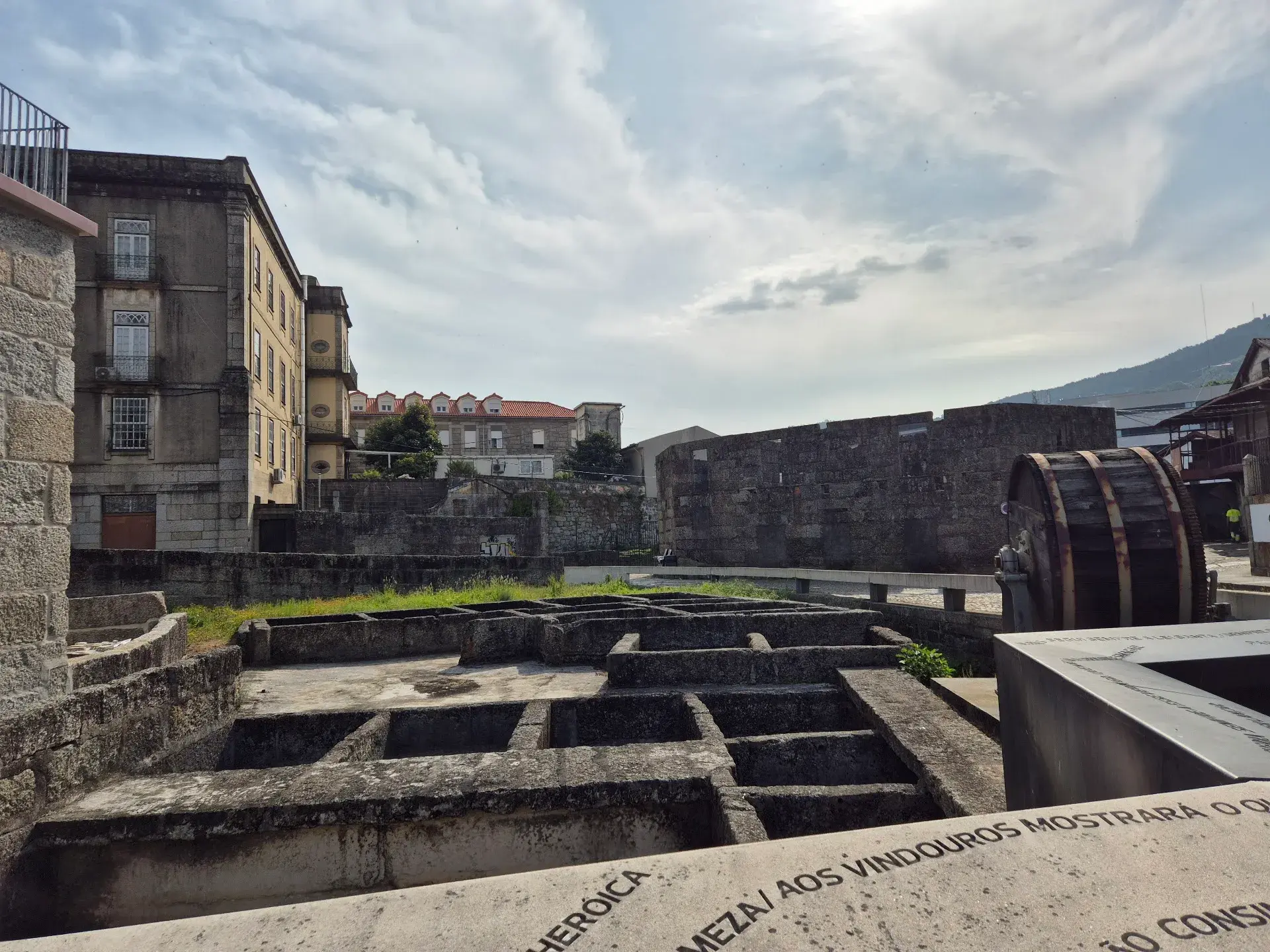
Today, the open-air grids of rectangular granite vats and adjacent plots at Largo da Cidade are preserved as an outdoor museum and public walkway. Water continues to flow gently through the exposed stone sluices and channels running alongside the weathered granite troughs.
Former tannery buildings and wooden drying lofts have been adaptively reused to house civic spaces. These include facilities for the University of Minho, a youth hostel, and an interactive science museum. The museum is named Curtir Ciência, playing on the dual meaning of the Portuguese verb "curtir", which historically means to tan hides and colloquially means to enjoy.
FAQ
What were the Tanques de Couros used for?
The stone vats were used for vegetable tanning, a process where animal hides were submerged in water and tannin-rich solutions from crushed oak bark or sumac to make them rot-proof and pliable.
Why was the Zona de Couros located outside the medieval city walls?
For centuries, the Zona de Couros was an avoided, malodorous area relegated outside the town walls due to the decomposing flesh, animal fats, and waste associated with leather processing.
Is the Zona de Couros a UNESCO World Heritage site?
Yes. In September 2023, UNESCO formally extended the World Heritage status of the Historic Centre of Guimarães to include the Zona de Couros.
What is Curtir Ciência?
Curtir Ciência is an interactive science museum located inside one of the former tannery factories. The name is a play on the Portuguese verb "curtir," meaning both to tan hides and to enjoy.
Discover Guimaraes like never before
Dive into Guimaraes hidden stories and secret spots with Ciceru interactive tours.
Explore tour
Audioguide
Quizzes
Maps
Solo
Couples
Groups & families

© Photo by Raquel Ferreres Lopez via Google Maps · Google Places