Augustinergasse: Zurich's Historic Medieval Lane
The Origins of Augustinergasse
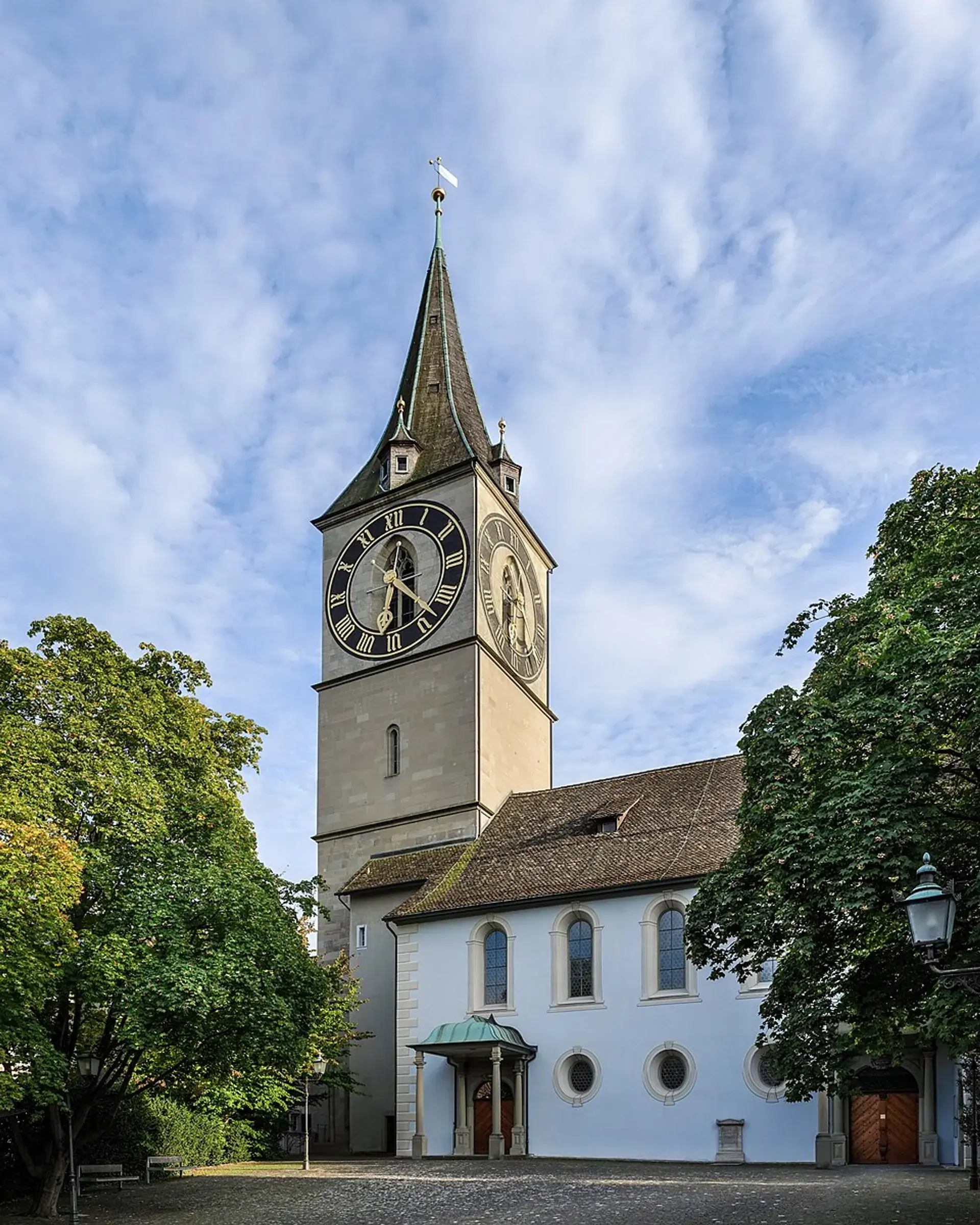
Augustinergasse is a 200-meter pedestrian-only medieval street located in the Old Town (Altstadt) on the left bank of the Limmat River in Zürich. Originating in the 13th century, it was initially an artisans' lane that linked the medieval Kecinstürlin gate at the Fröschengraben moat to Münsterhof and St. Peter's Church. During this era, shoemakers, potters, and tailors lived in the upper levels of the narrow buildings directly above their workshops.
The lane acquired its name from an Augustinian monastery established along the thoroughfare around 1270. Following the onset of the Swiss Reformation under Huldrych Zwingli, the monastic house was dissolved in 1525, and its precinct was subsequently repurposed for civic purposes. The adjacent Augustinerkirche remained standing and later became the parish seat for Zürich's Christ Catholic (Old Catholic) congregation in the 1870s following theological disagreements over the First Vatican Council.
Architectural Rivalry and Oriel Bay Windows
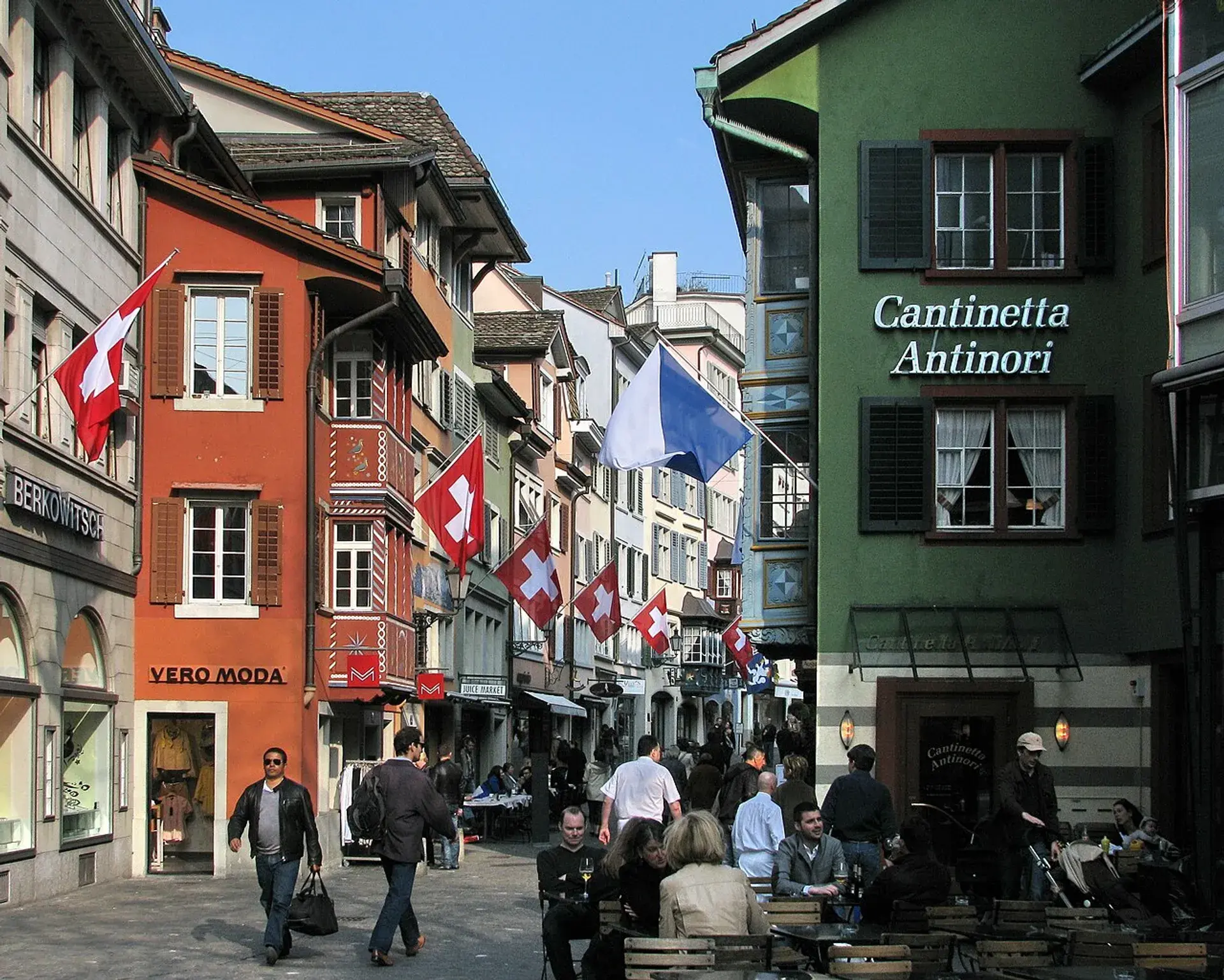
During the 17th century, the demographics of the street shifted dramatically as affluent textile and factory merchants replaced the earlier artisan class. This influx of wealth ignited an aesthetic rivalry among neighbors, leading residents to compete with one another by commissioning increasingly elaborate facades, painted trim, and ornate, carved-wood oriel bay windows (Erker).
These projecting bay windows served functional and economic purposes alongside their decorative value. Projecting outwards over the street, they allowed property owners to expand the usable interior floor space of their upper living quarters without encroaching upon the restricted street-level public right-of-way or incurring ground taxes. Additionally, homeowners deliberately constructed these windows offset to the side of the entrance doors rather than directly overhead. This angled orientation allowed residents inside to look down and assess visitors knocking at the door before choosing whether to open it.
Modern Character and Preservation
Today, Augustinergasse serves as an active, 24-hour car-free corridor linking Zürich’s modern commercial thoroughfare on Bahnhofstrasse with the historic Lindenhof quarter, Münzplatz, and St. Peterhofstatt. The street gently curves between facades finished in pastel pinks, ochres, deep reds, and terracotta, where upper stories lean slightly inward over stone paving.
The thoroughfare continues to blend commerce with domestic life. Ground floors house independent boutiques, craft shops, cafes, and restaurants, while private residential apartments occupy the levels above. As a transitional route between the 19th-century Bahnhofstrasse and Zürich's medieval core, Augustinergasse preserves an architectural timeline spanning from medieval artisan guilds to early industrial merchant estates.
FAQ
Why were the bay windows on Augustinergasse built offset from the front doors?
Builders deliberately positioned the oriel bay windows slightly to the side of the entrance doors so residents could glance down at an angle to screen callers knocking at the entrance before deciding to open the door.
How did oriel windows help homeowners circumvent taxes?
Projecting bay windows expanded the floor space of upper-story living quarters through an overhang, avoiding the need to expand onto the street level where public rights-of-way were restricted and ground taxes applied.
What is the origin of the name Augustinergasse?
The street was named after an Augustinian monastery established there around 1270. The monastery was secularized in 1525 during the Swiss Reformation led by Huldrych Zwingli.