Zürich Hauptbahnhof: History & Architecture Guide
Switzerland's Central Rail Hub
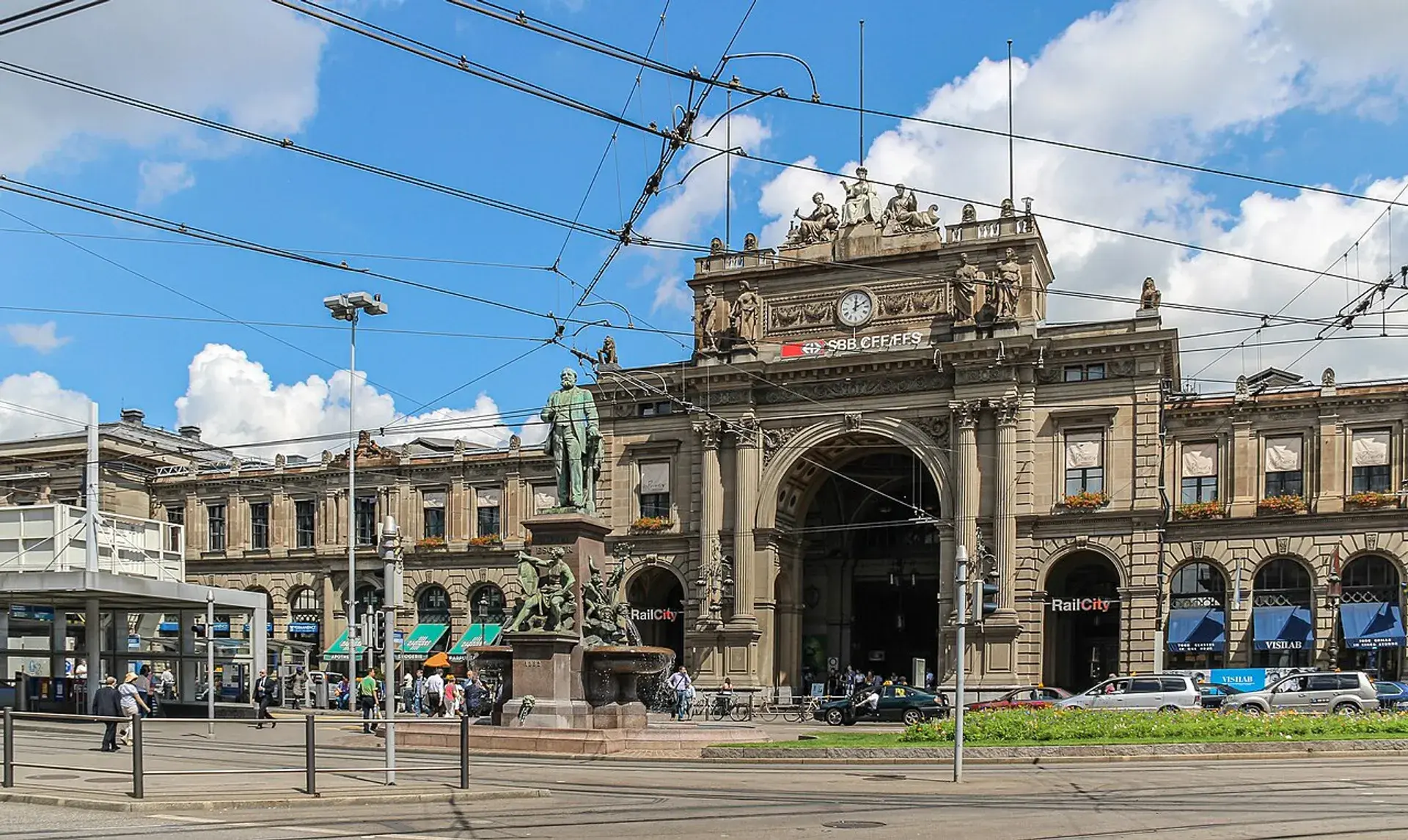
Zürich Hauptbahnhof, operated by Swiss Federal Railways (SBB), serves as Switzerland's largest railway station. Positioned at Bahnhofplatz between the Limmat and Sihl rivers, the complex accommodates roughly 2,900 train movements and more than 400,000 passengers daily. Its infrastructure comprises 26 tracks across surface platforms and subterranean levels, operating on an open-access system without ticket barriers. The station integrates domestic intercity lines, the regional S-Bahn network, and international high-speed routes including EuroCity, TGV, and ICE services. Across its four transit levels, passenger movement synchronizes with Switzerland's clock-face timetable, peaking during coordinated hub minutes around the top and bottom of every hour.
The Spanisch-Brötli-Bahn and 19th-Century Expansion
The station opened in August 1847 as the terminus for Switzerland's first domestic railway line, the Schweizerische Nordbahn (Swiss Northern Railway), which covered a 23-kilometer route between Zürich and Baden. The service quickly gained the moniker Spanisch-Brötli-Bahn after the flaky hazelnut and apricot pastries baked in Baden. Prior to the line's opening, servants carried the delicacies to wealthy Zürich households on foot overnight; the train shortened this delivery time to approximately 45 minutes. Rapid rail development soon outgrew the initial wooden depot, prompting plans for a permanent civic landmark.
Neo-Renaissance Architecture and Urban Reshaping
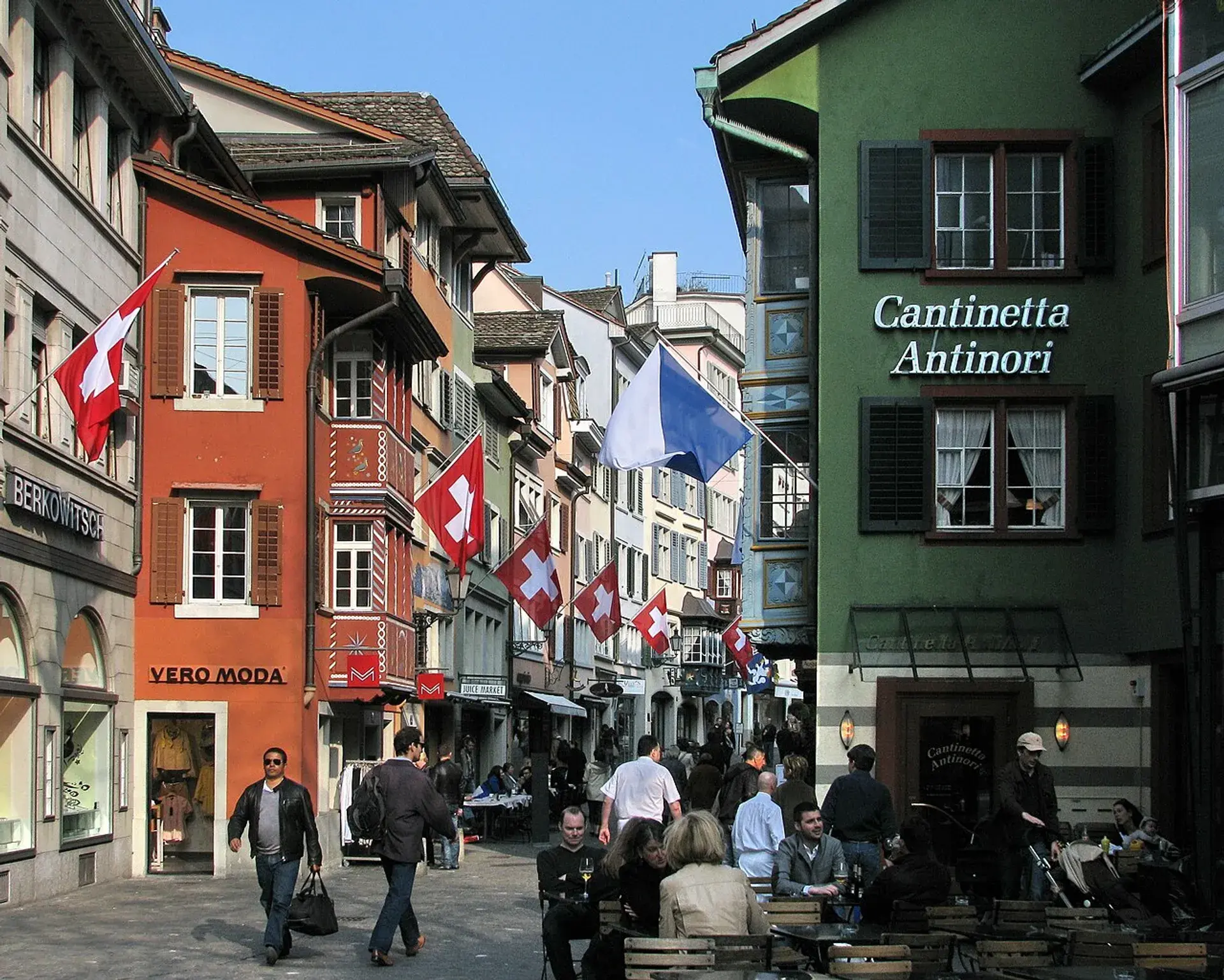
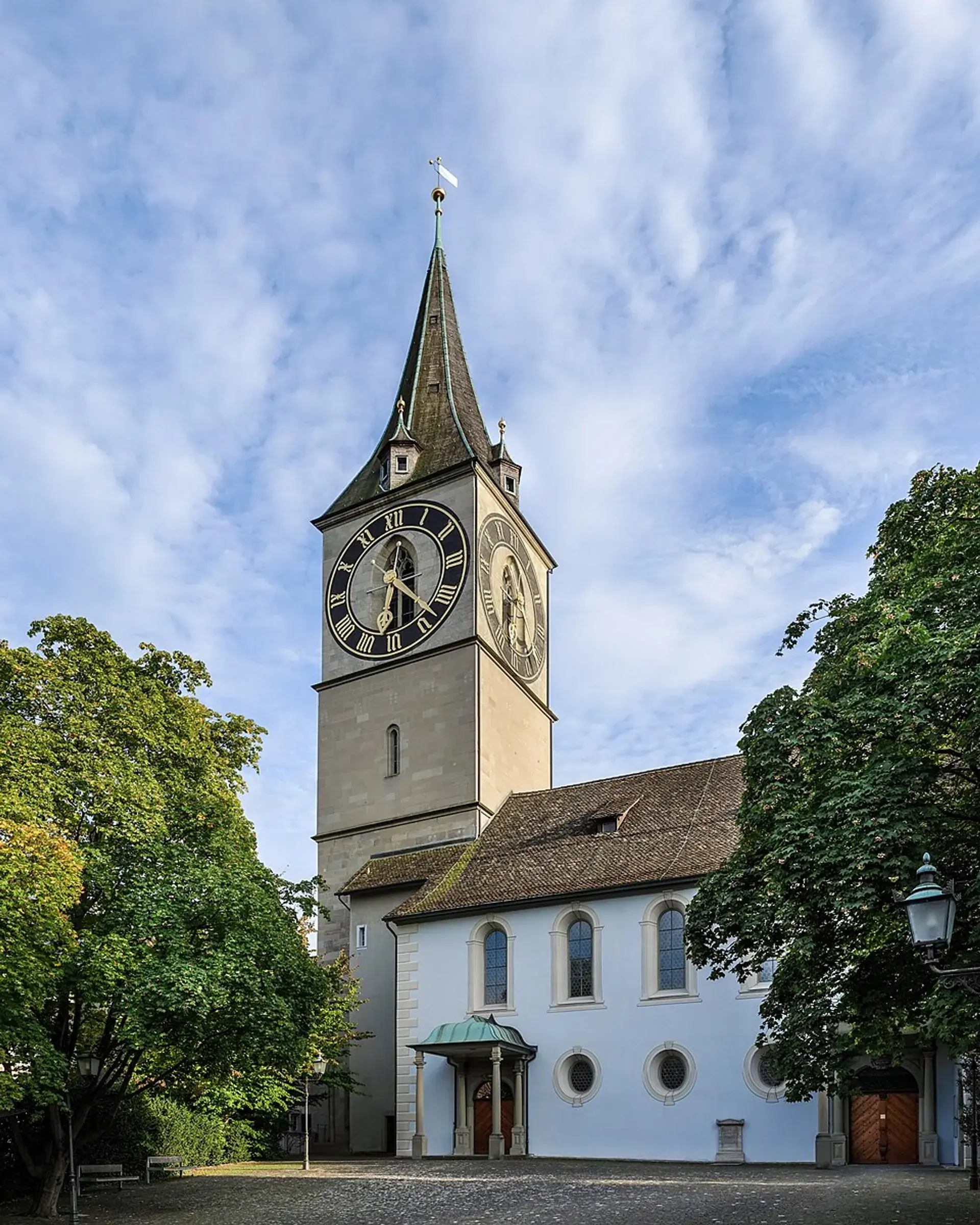
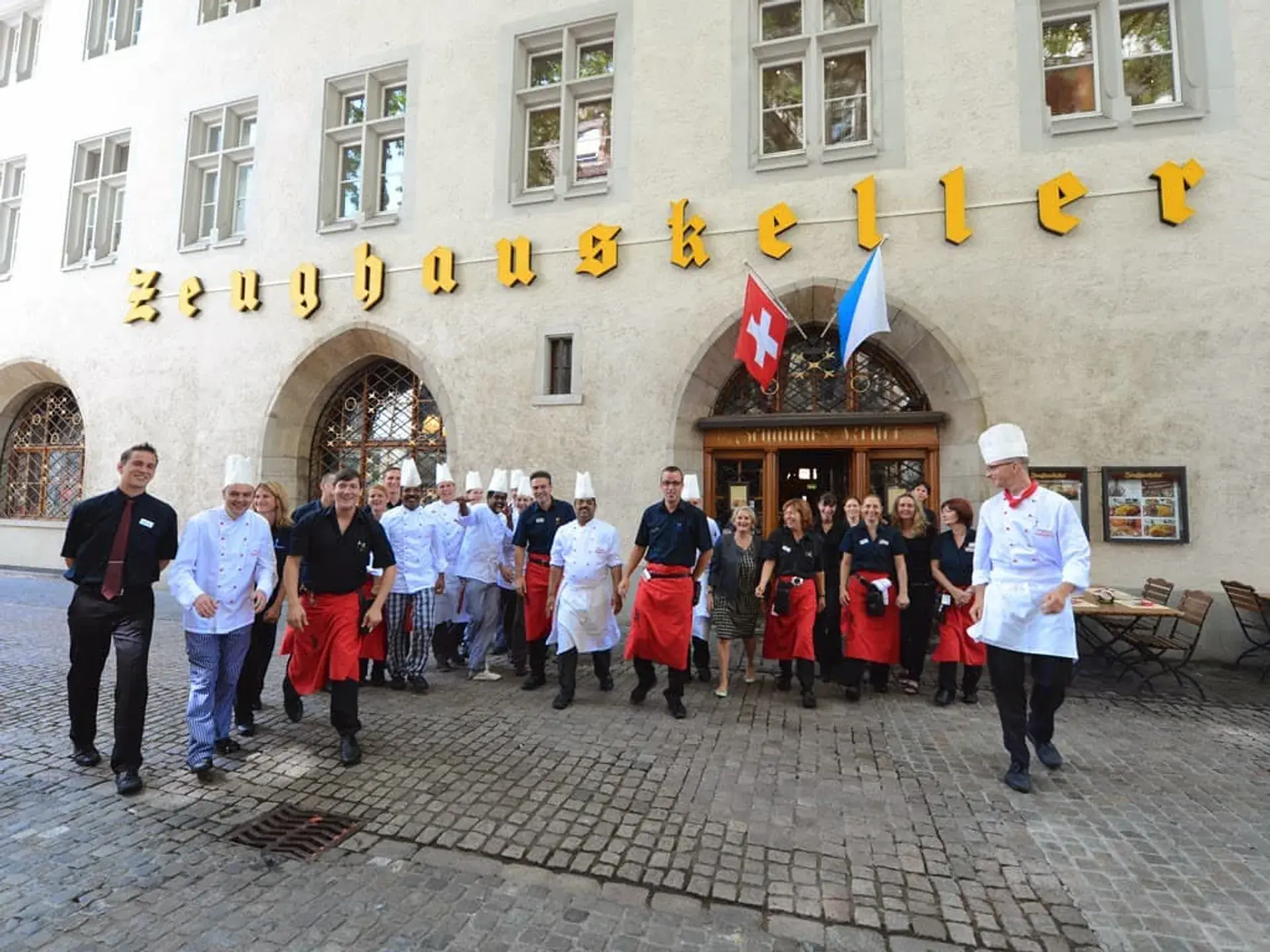
In 1871, architect Jakob Friedrich Wanner completed the current neo-Renaissance terminus. Built of sandstone, the monumental structure features a grand triumphal arch portal facing south toward Bahnhofplatz. The construction of the station fundamentally transformed Zürich's urban core. To link the railway directly to Lake Zürich and the financial district, the city filled in its medieval western defensive moat, known as the Fröschengraben, clearing the path for Bahnhofstrasse. Today, the station anchors the northern beginning of the city's historic route, which continues past Lindenhof, Augustinergasse, St. Peter, Zeughauskeller, Fraumünster, and across the Münsterbrücke toward the Grossmünster, Hirschenplatz, and the Predigerkirche.
The Alfred Escher Memorial and Underground ShopVille
Bahnhofplatz features an 1889 bronze memorial fountain by sculptor Richard Kissling honoring Alfred Escher. Escher, a prominent statesman and railway entrepreneur, co-founded Credit Suisse and the Federal Institute of Technology (ETH) and spearheaded the Gotthard Railway project. The outdoor monument incorporates a distinctive hydraulic design: water from its upper basin drains downward into the subterranean concourse to feed a secondary decorative fountain inside ShopVille. ShopVille features over 200 shops, dining spots, and everyday services operating seven days a week, providing direct pedestrian pathways between rail platforms and local tram networks.
The Haupthalle and The Guardian Angel
The station's historic main concourse, the Haupthalle, is preserved as a public hall that hosts cultural exhibitions, seasonal artisan fairs, and the annual indoor Christkindlimarkt. Suspended from the ceiling of this hall hangs L'Ange Protecteur (The Guardian Angel), an 11-meter-tall, 1.2-tonne sculpture created by French-American artist Niki de Saint Phalle. Donated by Securitas in 1997 for the 150th anniversary of Swiss rail, the vibrant figure traveled from its manufacturing site in the United States by cargo ship to Rotterdam, proceeded along the Rhine River to Basel, and arrived overland for final assembly. Because the artwork was finished with water-soluble pigments, station maintenance crews care for it exclusively using feather dusters and compressed-air sprays.
FAQ
Why was the inaugural railway from Zürich called the Spanisch-Brötli-Bahn?
The 1847 railway between Zürich and Baden earned the nickname from the local hazelnut and apricot pastries baked in Baden. Servants who previously walked overnight to bring them fresh to Zürich households could instead receive them in about 45 minutes by train.
Who is honored by the monument outside Zürich Hauptbahnhof?
The 1889 bronze fountain on Bahnhofplatz honors Alfred Escher, a key political and industrial figure who co-founded Credit Suisse and ETH Zurich, and promoted the construction of the Gotthard Railway.
How is Niki de Saint Phalle's Guardian Angel sculpture cleaned?
Because the 1.2-tonne sculpture was painted with water-soluble pigments, maintenance teams avoid liquid cleaners and dust the artwork exclusively with compressed air and feather dusters.