Hirschenplatz: History of Zürich's Niederdorf Square
The Crossroads of Zürich’s Old Town
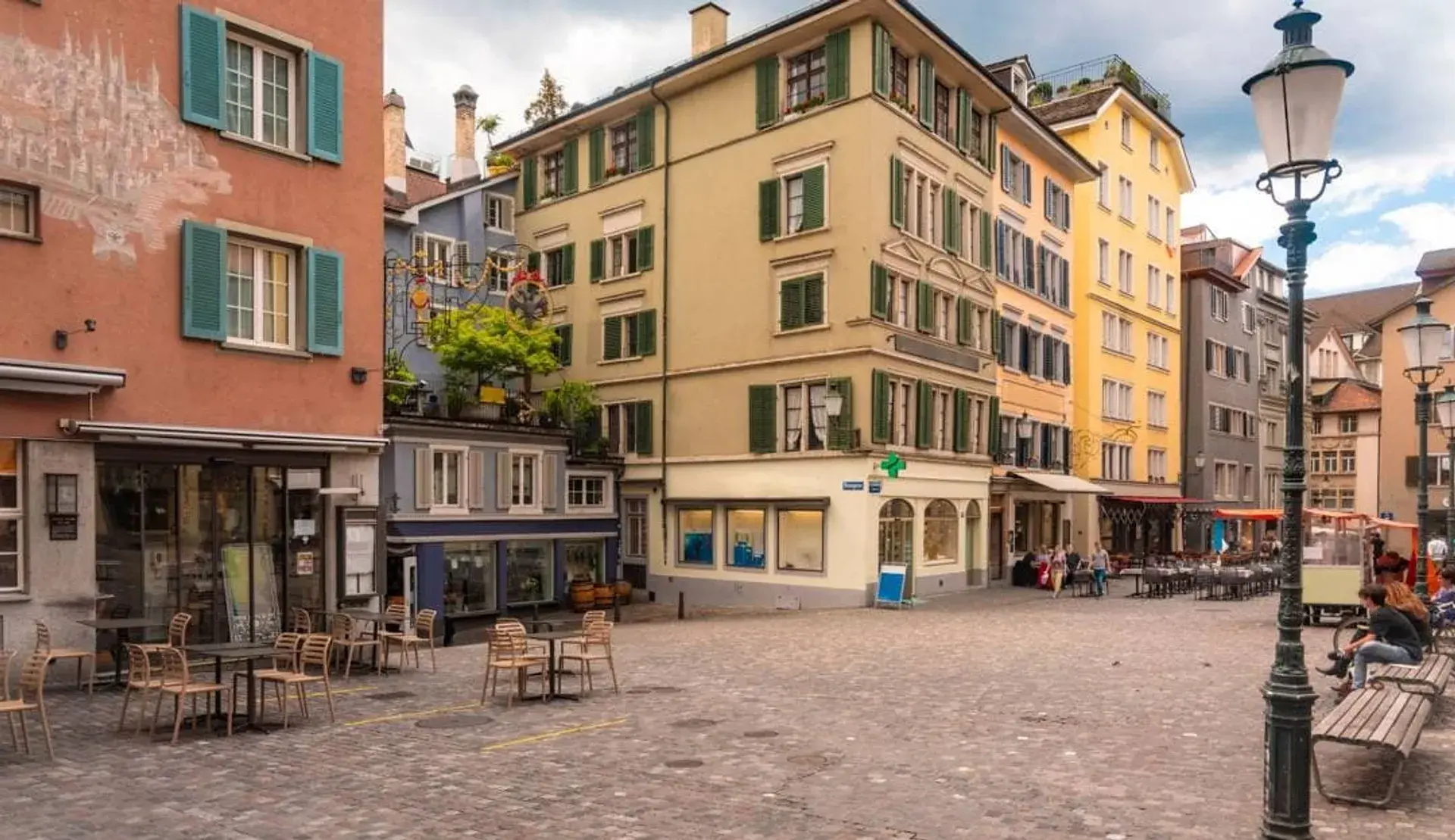
Hirschenplatz serves as an active pedestrian square in the Niederdorf quarter on the right bank of the Limmat River in Zürich. Situated at the junction of Niederdorfstrasse, Spitalgasse, and Brunngasse, the plaza was created in 1877 following the demolition of former municipal hospital buildings. In 1917, the clearing received its official designation as Hirschenplatz, named in honor of the historic Gasthof zum Hirschen. The title also pays tribute to the nearby Hirschengraben, a former town moat where live deer were enclosed between 1533 and 1784.
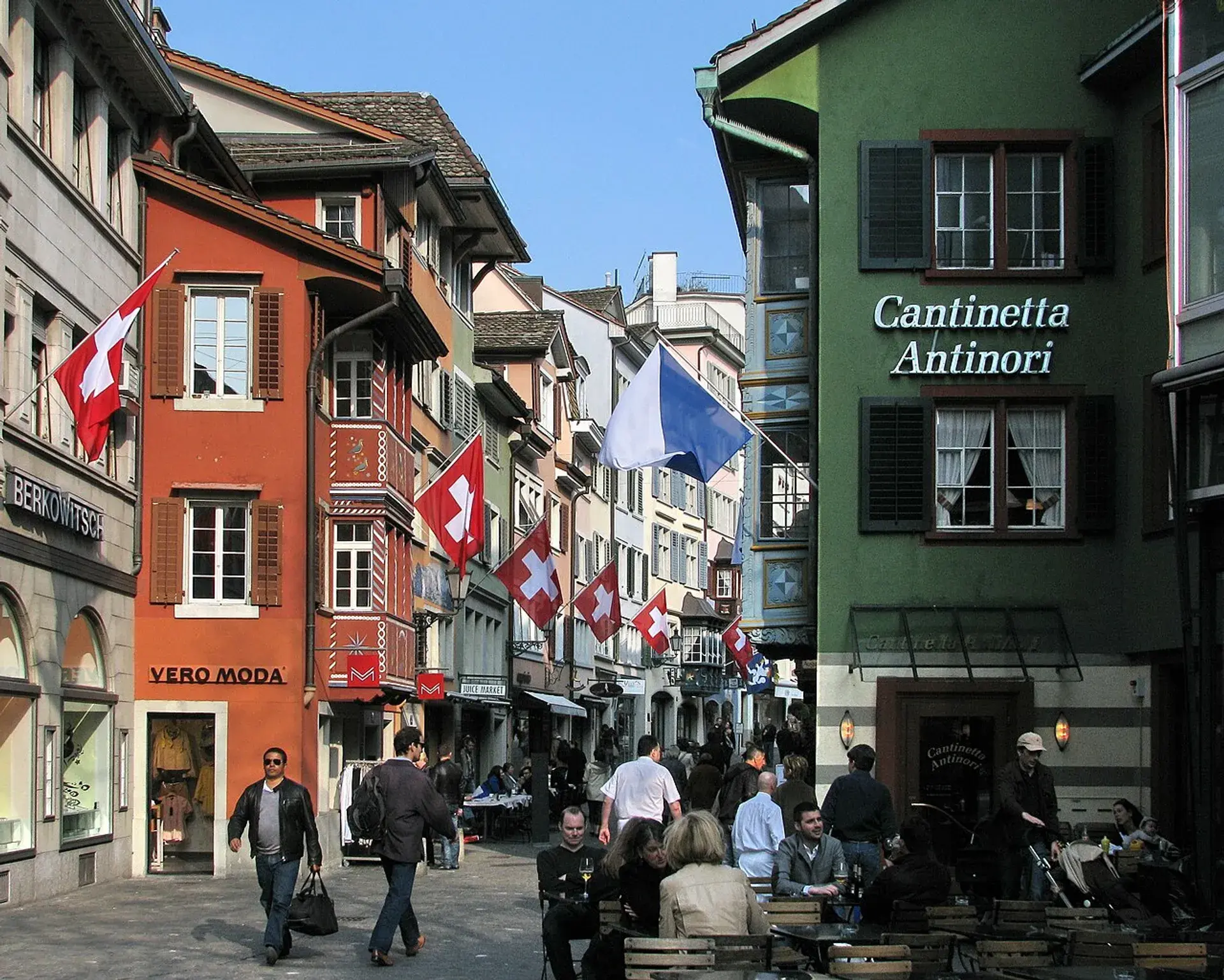
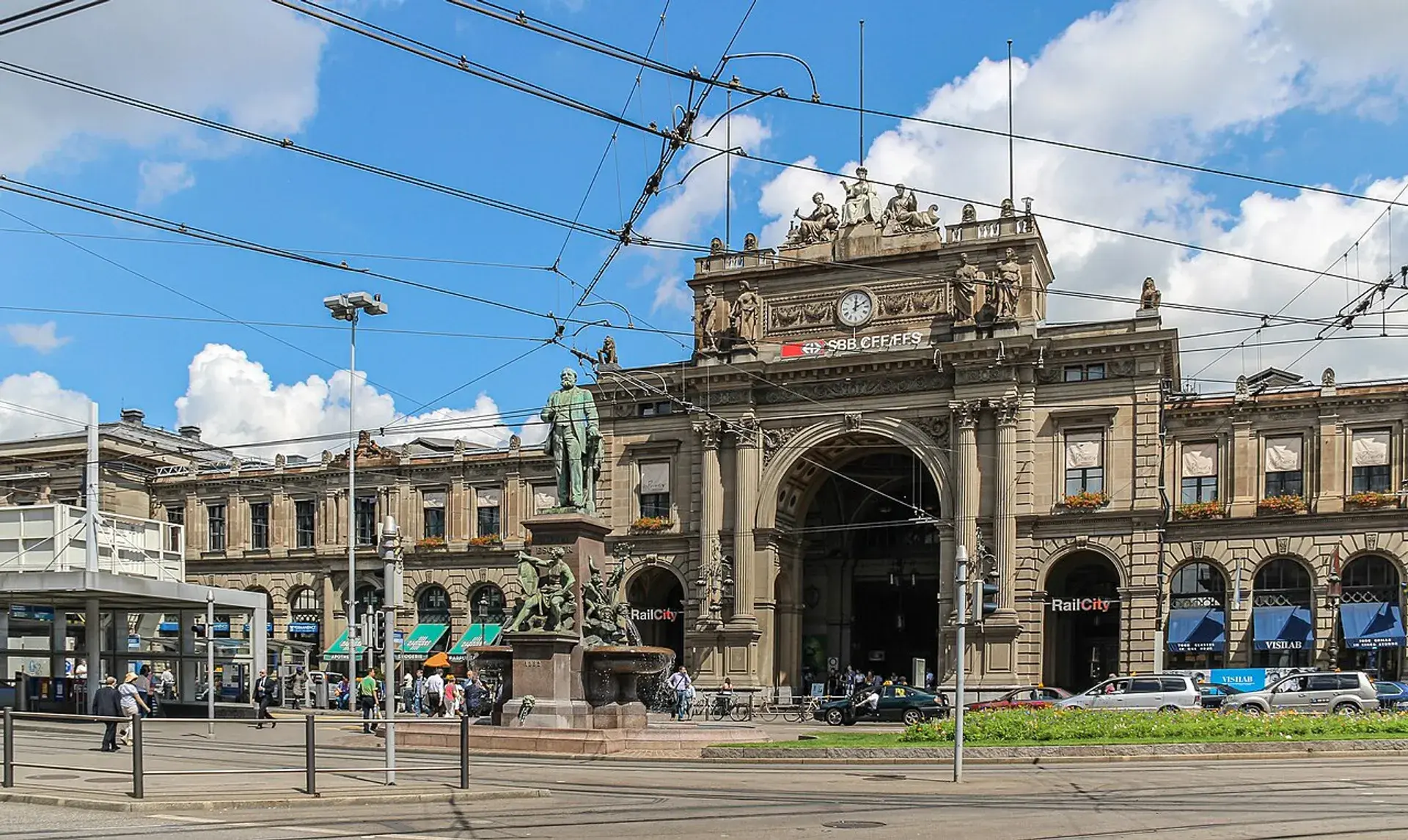
Today, the car-free square links key pedestrian paths between Zürich's Central station and landmarks such as the Grossmünster and the Predigerkirche.
Medieval Roots and Monastic Origins
The architectural frame of Hirschenplatz is defined by centuries of urban hospitality, anchored by Hotel Hirschen and Hotel Adler. The core of Hotel Hirschen consists of three interconnected buildings dating to the thirteenth and fourteenth centuries. Originally, these structures functioned as a hospice for the Dominican Predigerkloster.
Following the Reformation led by Huldrych Zwingli in the 1520s, the religious holdings were secularized. The former monastery hospice became an inn known as Gasthof zum Schermesser around 1530, later taking the name Gasthof zum Hirschen in 1703. Beneath the building, an intact water well dating back to 1340 sits in the vaulted stone cellar, continuously fed by natural groundwater.
An Incubator for Dada, Satire, and Heavy Metal
During the twentieth century, Hirschenplatz repeatedly served as a gathering space for countercultural movements. In 1916, writer Hugo Ball and fellow artists met at the Gasthof zum Hirschen to draft the Dada Manifesto, directly linking the square to the avant-garde movement established in the surrounding Old Town.
Between the 1930s and 1950s, the building became a major venue for political cabaret and anti-fascist theater. Erika and Klaus Mann, alongside actor Therese Giehse, staged their anti-Nazi cabaret Die Pfeffermühle here between 1933 and 1936. The location also hosted Cabaret Cornichon from 1934 to 1948 and Cabaret Fédéral from 1949 to 1953.
By the late 1960s, the cellar had transitioned into the Beat Club. The venue hosted international acts including Pink Floyd. Most notably, in the autumn of 1969, the British rock band Black Sabbath played an extended club residency on the basement stage, using the performances to workshop and refine tracks for their landmark 1970 album, Paranoid. A commemorative plaque marks the band's history at the building.
Visual Curiosities and Modern Atmosphere
Hirschenplatz also holds ties to Swiss visual art. In the 1830s, landscape and animal painter Rudolf Koller grew up on the square while his father managed the Schwarzer Adler inn. As a child, Koller practiced drawing by sketching horses and cows directly onto the inn's doors, walls, and stable partitions.
In modern times, animal imagery remains a fixture of the square. Since 1998, a life-sized, painted blue fiberglass cow named Heidi has stood on a first-floor balcony of Hotel Adler. Below, open-air cafe and restaurant terraces line the cobblestones. The aromas of warm fondue and raclette drift across the plaza from the Swiss Chuchi terrace, while the historic Weinschenke continues its tavern trade inside Hotel Hirschen.
FAQ
Why is the square called Hirschenplatz?
The square was officially named in 1917 after the historic inn Gasthof zum Hirschen. The name also references the nearby Hirschengraben, where deer were kept in the town moat from 1533 to 1784.
What is Black Sabbath's historical link to Hirschenplatz?
In the autumn of 1969, Black Sabbath played an extended residency at the Beat Club in the basement of Hotel Hirschen, using the stage to develop and refine songs for their 1970 album Paranoid.
What medieval remnants survive beneath the square's buildings?
Hotel Hirschen incorporates three structures dating back to a thirteenth- and fourteenth-century Dominican hospice. In its vaulted stone cellar, an intact groundwater well from 1340 is still preserved.