Lindenhof in Zurich: Roman Hilltop Above the Limmat
Rising approximately 25 meters above the western bank of the Limmat River, Lindenhof is an elevated moraine hilltop terrace in Zürich's Old Town (Altstadt). Shaded by a canopy of mature linden trees, the car-free square functions as both a peaceful public park and a Swiss heritage site of national significance. It represents the historical cradle of Zürich, marked by continuous human occupation extending from prehistoric settlements through the Roman and medieval periods.
From Celtic Settlement to Roman Turicum
Long before it became a civic park, the hill was an important strategic stronghold. Archaeological excavations have identified Neolithic and Bronze Age traces, as well as a 1st-century BC fortified oppidum established by the Celtic Helvetii. Around 15 BC, the Roman Empire established a customs station at the river crossing on the hill, calling the settlement Turicum.
In the late 4th century CE under Emperor Valentinian I, Roman authorities built a heavy stone castellum on the terrace. Equipped with ten towers and two-meter-thick defensive walls, the fort guarded against Alamannic incursions. The hilltop retained its political status into the Middle Ages; during the 9th century, Charlemagne's grandson Louis the German erected a royal palace (Kaiserpfalz) directly over the Roman foundations.
Evolution into a Public Terrace
During the 13th century, Zürich's burghers dismantled the medieval fortifications and leveled the plateau into a shared civic terrace. In 1474, the city deliberately planted 52 linden trees across the grounds to provide a shaded space for civic gatherings, shooting competitions, and games. The terrace later served as the stage for a major constitutional milestone in 1798, when citizens assembled under the trees to swear an oath of allegiance to the French-backed Helvetic Constitution.
The terrace also features public monuments tied to local history and folklore. Near the center stands the Hedwig Fountain, sculpted in 1912 by Gustav Siber. It portrays a helmeted woman in honor of a 1292 legend in which Zürich's women, led by Hedwig ab Burghalden, donned armor and held lances to deceive an invading Habsburg army into believing the city was fully defended. Modern historians regard the episode as romantic folk legend rather than verified military history. Along the southern edge of the square stands the 19th-century lodge building of the Freemasons, Modestia cum Libertate.
Subterranean Ruins and the Origin of Zürich
Significant structural remnants of the site's layered history survive beneath the square in the Lindenhofkeller. This underground space contains preserved masonry from both the 4th-century Roman fortress and the Carolingian palace. Independent visitors can view the ruins by borrowing the physical access key directly from the municipal security counter (Schalter S) inside Zürich's Stadthaus.
Lindenhof is also the discovery site of the city's earliest written name. In 1747, workers unearthed a 2nd-century Roman tombstone dedicated to a child named Lucius Aelius Urbicus. Its Latin inscription contained the designation STA[tio] TURICEN[sis], providing the oldest confirmed written record of the Roman post that gave Zürich its name.
Modern Public Park and Access
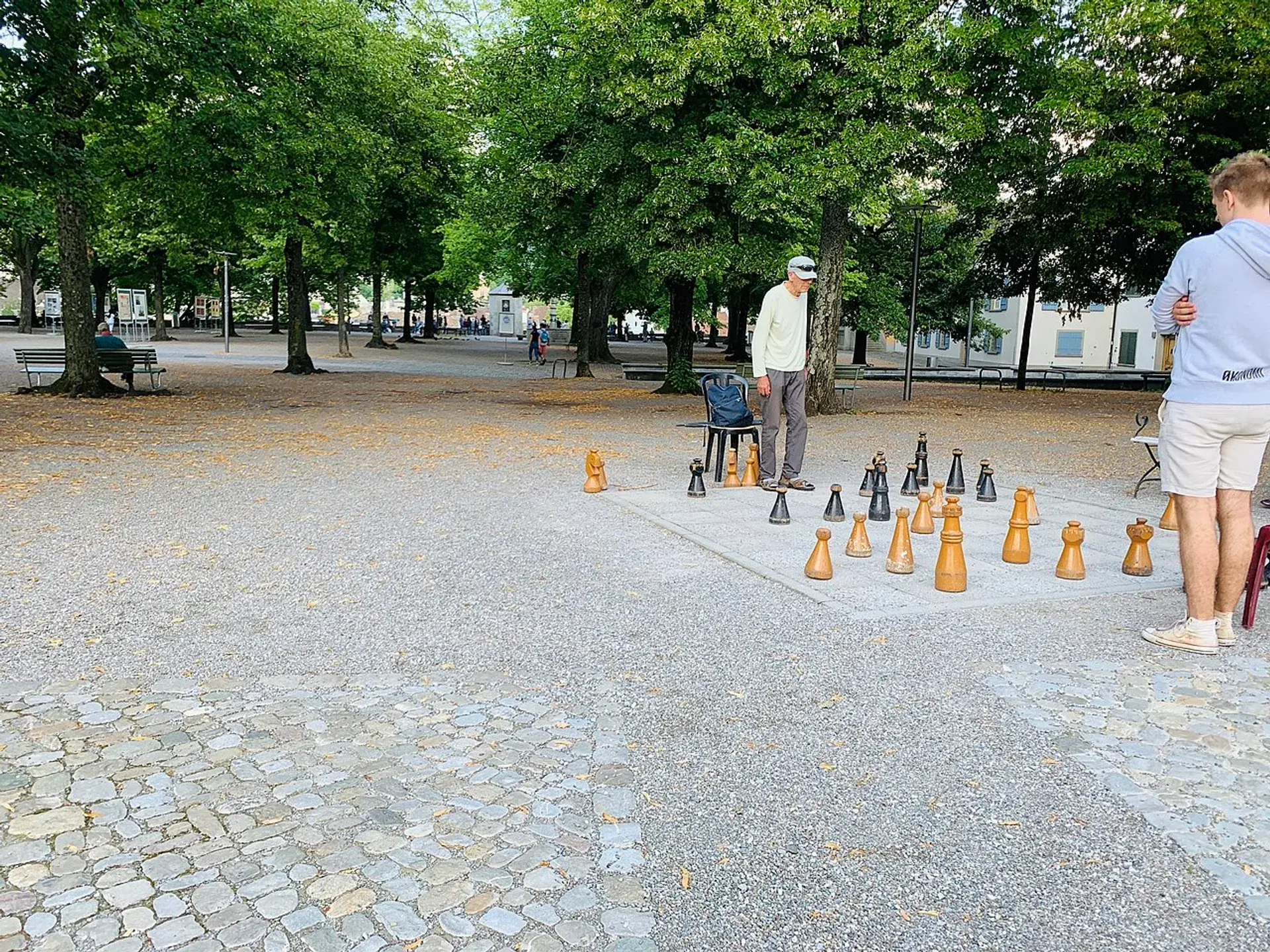
Today, Lindenhof functions as a scenic viewpoint offering sweeping panoramas over the Limmat River, the Guild Houses lining Limmatquai, the twin towers of the Grossmünster, the Rathaus, and the university quarter on Zürichberg. Visitors gather on the coarse pea gravel to play boules, enjoy picnics, or compete on oversized outdoor chessboards amid filtered sunlight and the sound of distant tram bells from the riverbanks below.
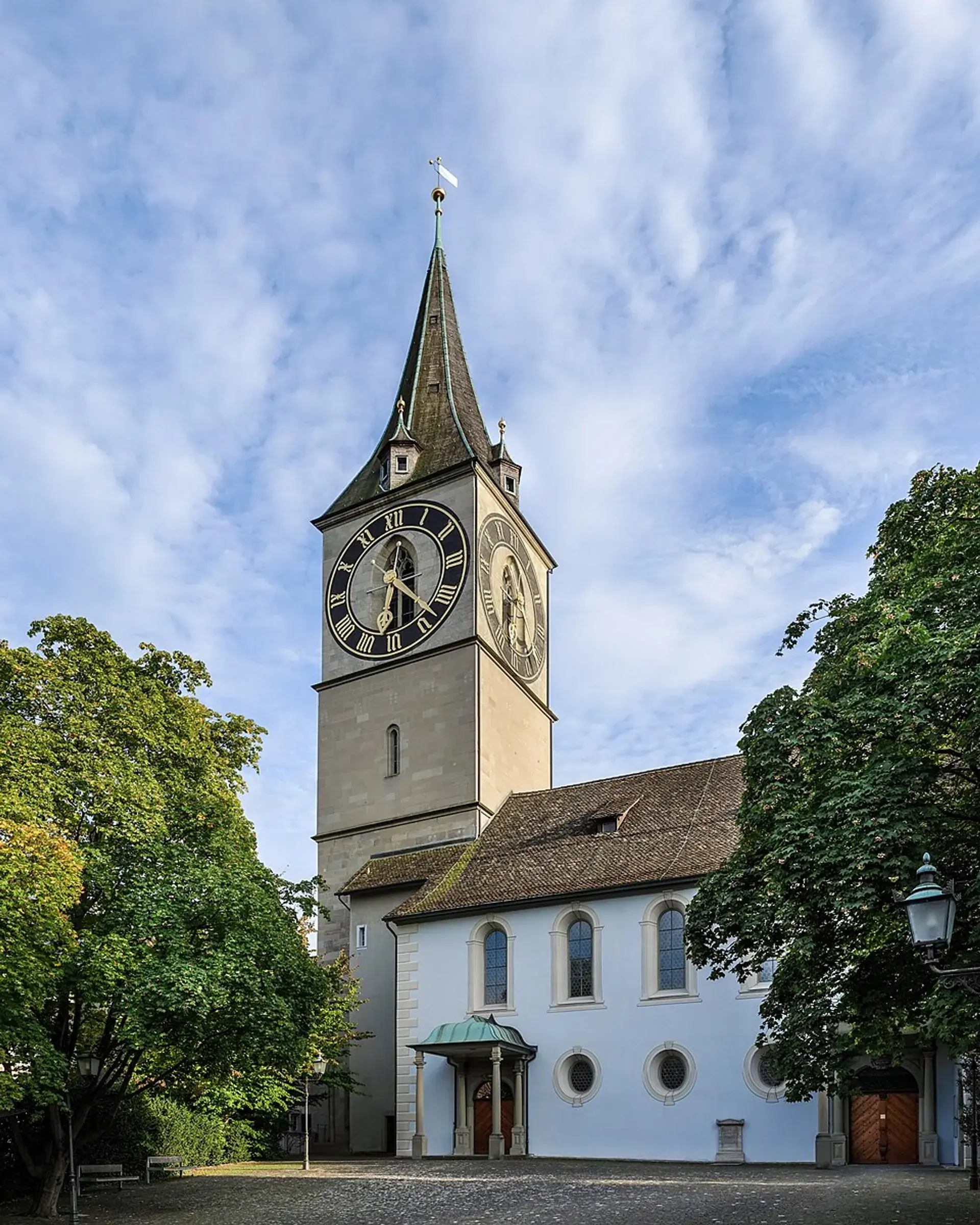
The square is open 24 hours a day year-round with free admission. Pedestrians can reach the raised terrace via cobblestone footpaths and stairs leading up from the historic Schipfe waterfront or through Pfalzgasse from Rennweg. Within the Old Town, the hilltop provides a natural link between the commercial district of Bahnhofstrasse and historic monuments such as St. Peter and the Fraumünster.
FAQ
How can the underground ruins beneath Lindenhof be visited?
Remains of the 4th-century Roman fortress and Carolingian palace are preserved in the subterranean Lindenhofkeller. Independent visitors can explore the space by borrowing the physical access key from the municipal security desk (Schalter S) at Zürich's Stadthaus.
What archaeological discovery on Lindenhof provided the origin of Zürich's name?
In 1747, a 2nd-century Roman tombstone was unearthed on the hill bearing the inscription 'STA[tio] TURICEN[sis]', which represents the earliest confirmed written record of the Roman customs post that evolved into the name Zürich.
What is the story behind the Hedwig Fountain on Lindenhof?
Erected in 1912, the fountain commemorates the traditional tale of the 1292 siege by Duke Albrecht I von Habsburg. According to local legend, Zürich's women dressed in armor and assembled on Lindenhof to trick the besieging forces into thinking an armed garrison remained, though historians consider it a folk legend.