University Church of St Mary the Virgin, Oxford
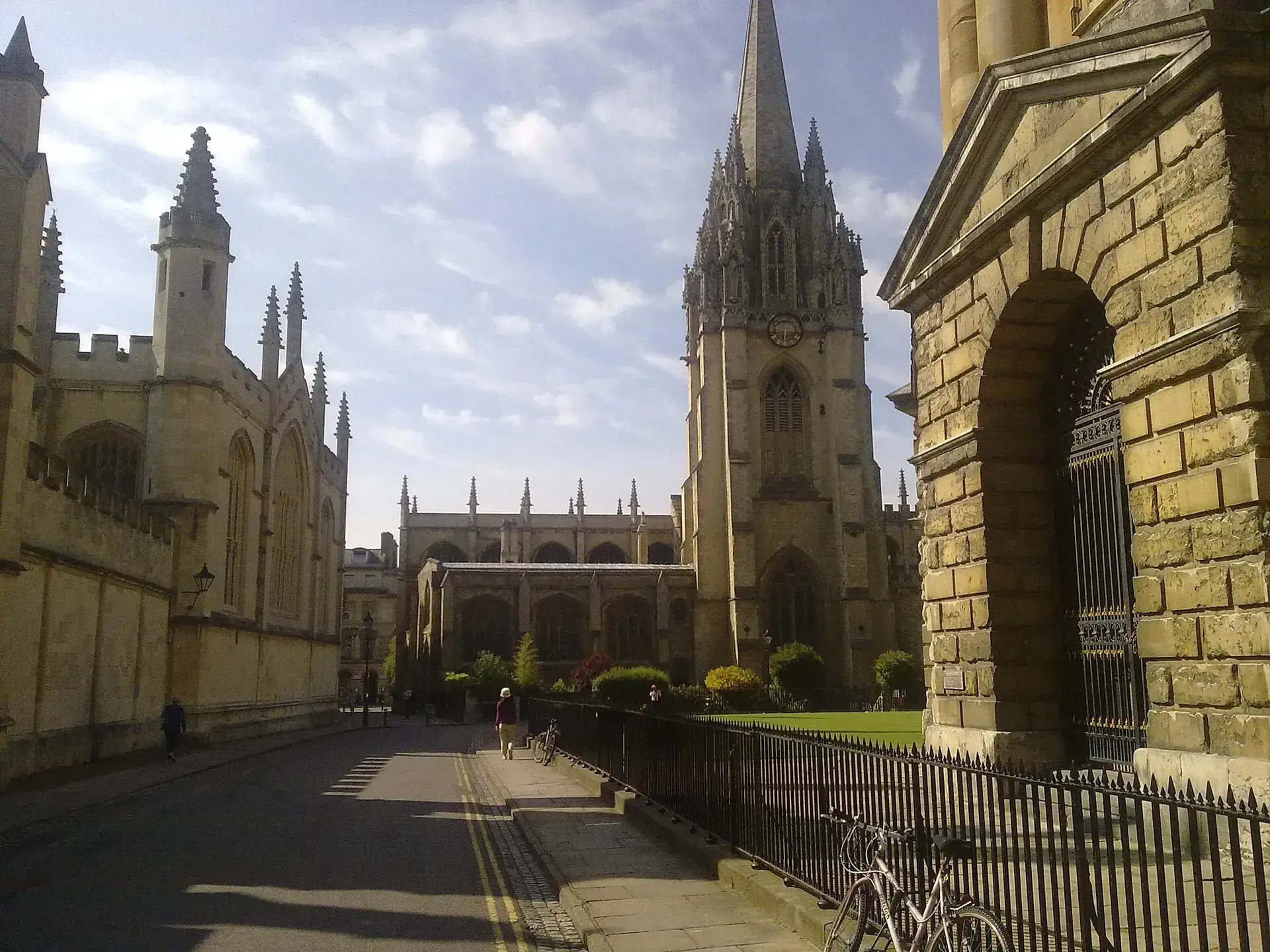
The University of Oxford operated for centuries inside a working parish church before it built its own halls and lecture rooms. Situated on the north side of the High Street at the southern threshold of Radcliffe Square, the University Church of St Mary the Virgin stands as a Grade I listed architectural landmark and the official church of the University of Oxford.
Occupying a site used for Christian worship since Anglo-Saxon times, the church remains the spatial pivot around which the surrounding collegiate city developed.
The Cradle of Oxford University
Beginning in the 13th century, St Mary’s served as the de facto institutional headquarters of the burgeoning university. Academic disputations, lectures, and Congregation assemblies all occurred within the church's walls. Around 1320, a two-storey annex was erected north of the chancel to house the university's Convocation on the ground level, while the upper floor safeguarded a manuscript bequest from Thomas Cobham, creating Oxford's very first university library.
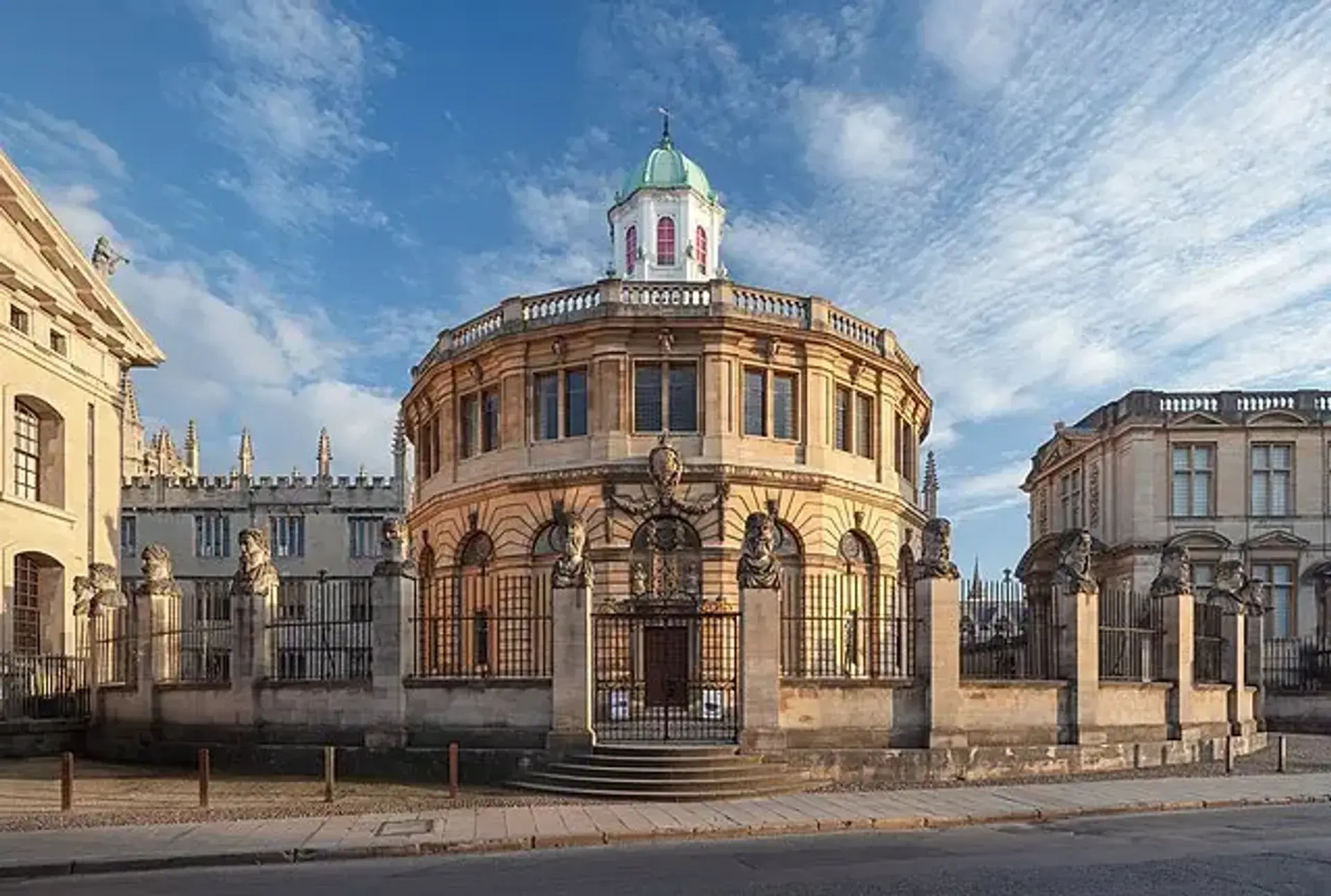
Academic degree ceremonies took place inside the church for centuries. However, the often rowdy behavior of students during these celebrations clashed with the building's sacred function, eventually prompting the university to construct the nearby Sheldonian Theatre in 1669 to host secular ceremonies elsewhere.
Oxford walking tour with audio and quizzes: town, gown and Wren
2 hours10 stopsAudio guideStart any day, at your own paceTicket on your phone · 30-day refundReformation Turmoil and Religious Movements
During the Tudor era, the church witnessed pivotal moments of the English Reformation. In 1555 and 1556, St Mary’s hosted the heresy trials of the Oxford Martyrs: Bishops Hugh Latimer and Nicholas Ridley, alongside Archbishop of Canterbury Thomas Cranmer. Cut into one of the stone pillars in the nave is a distinct notch, where masonry was deliberately hacked away to anchor the temporary wooden scaffolding constructed for Cranmer's trial. It was from this platform in March 1556 that Cranmer dramatically renounced his previous recantations before being led to his execution.
The church continued to shape English religious history in subsequent centuries. John Wesley preached from the pulpit in 1738, and between 1828 and 1843, John Henry Newman served as vicar, delivering influential sermons that sparked the Oxford Movement.
Centuries of Architecture and Civil War Scars
The building reflects diverse architectural epochs. Its medieval tower dates to around 1280, capped with a Decorated Gothic spire built between 1315 and 1325. The nave and chancel were rebuilt in the late 15th century in the Perpendicular Gothic style. Of the twelve statues that adorn the spire pinnacles, eleven are 1890s replacements sculpted by George Frampton; the weathered medieval originals reside in the cloisters of New College.
In 1637, an ornate Baroque south porch was added, featuring spiraling Solomonic columns and a central statue of the Virgin and Child. The installation drew fierce opposition from Puritans, who later used the porch as physical evidence of "popery" during Archbishop William Laud’s treason trial in 1641. The Virgin and Child statue still displays visible bullet holes and scars, damage attributed to Parliamentary soldiers during the English Civil War.
Ascending the Medieval Tower
The church’s medieval tower provides one of the most celebrated vantage points in Oxford. Reaching the open-air parapet involves climbing 127 worn stone steps along a tightly winding spiral staircase. The route passes through the clock room and the upper chamber of the 14th-century library addition.
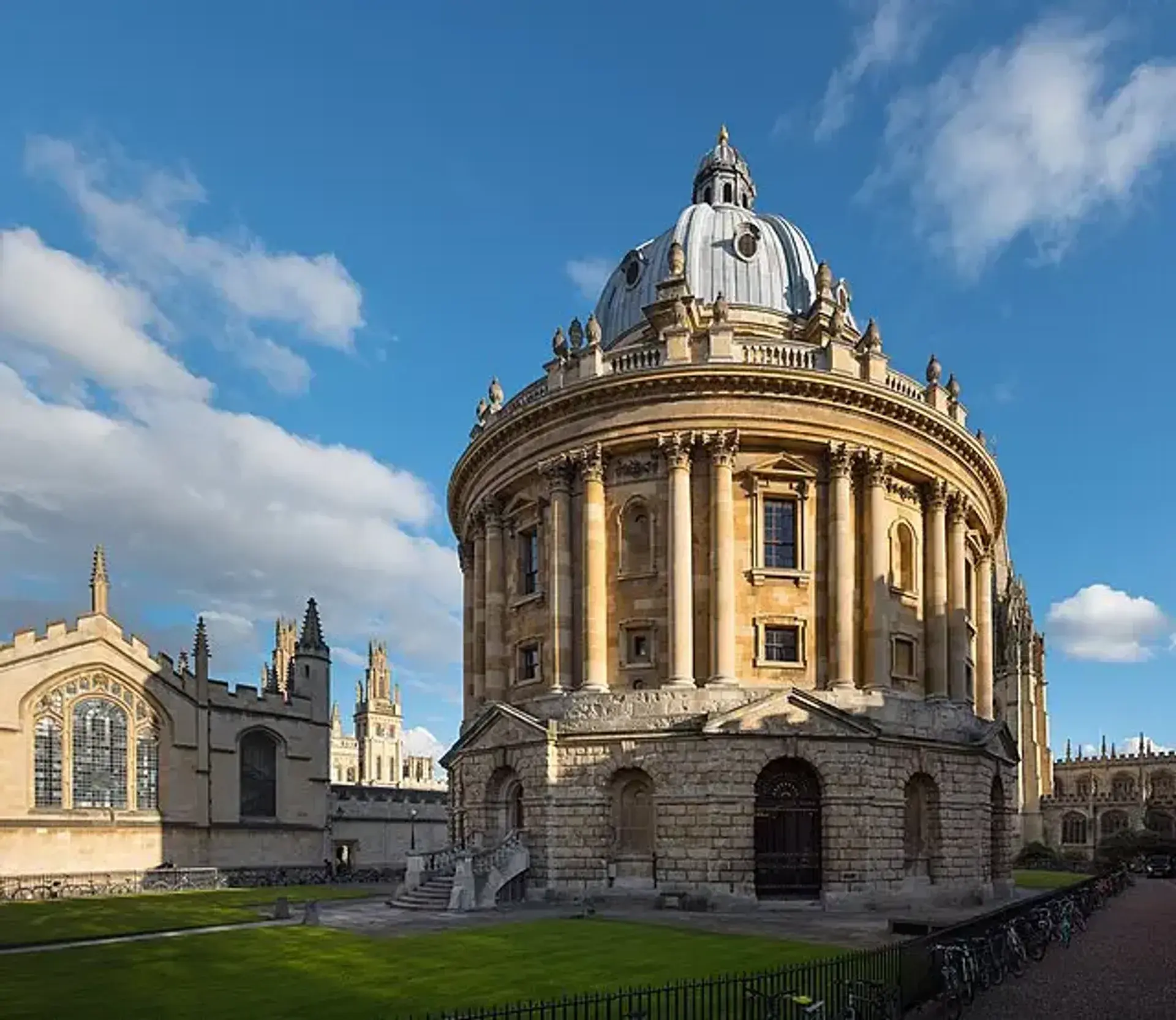
From the narrow stone ledges of the tower balcony, visitors encounter a top-down panoramic view over Radcliffe Square. The vantage point provides an unobstructed perspective of the domed Radcliffe Camera, flanked directly by All Souls College, Brasenose College, and the Bodleian Library complex.
Visiting St Mary the Virgin
St Mary the Virgin remains an active Anglican parish church, holding regular Sunday services, university sermons, and choral services throughout the academic term. The church nave is accessible to the public free of charge year-round. Access to the tower involves a paid admission ticket, and the surrounding church precincts house a gift shop alongside The Vaults and Garden cafe.
FAQ
Why is the church considered the birthplace of Oxford University?
Before the university constructed its own dedicated secular halls, St Mary’s served from the 13th century as the venue for university lectures, Congregation meetings, academic debates, degree ceremonies, and its first library.
What is the historical significance of the notch in the nave pillar?
The notch was cut into the masonry to support a temporary wooden platform built for the 1555–1556 heresy trials of the Oxford Martyrs, where Archbishop Thomas Cranmer dramatically recanted his previous submissions.
Why was the 1637 Baroque south porch controversial?
Featuring twisting Solomonic columns and a statue of the Virgin and Child, the porch was cited by Puritan accusers as physical evidence of Catholic sympathies during Archbishop William Laud's 1641 treason trial.
What can be seen from the top of the church tower?
The tower parapet offers a direct top-down view of Radcliffe Square, including the circular Radcliffe Camera dome, All Souls College, Brasenose College, and the Bodleian Library.