Do European Christmas Markets Take Card? What to Carry in 2026
Last updated: September 2026
Intro
Some stalls take cards, many do not, and hardly any organiser says which. So carry cash for every market, and keep a card as the backup rather than the plan. The thing that catches people out is not the card question anyway, it is the mug deposit: you pay extra for the cup and only get it back if you return it. Here is what could be checked in September 2026, and where the honest answer is "ask first".
If you want dates before you pack, the Christmas markets in Europe 2026 calendar has them.

⚡ Quick answer
- Card: reported for 2026 only at Vienna's MAGMAG markets and the Prater, per Ciceru's Vienna guide. Everywhere else, no organiser page checked says either way
- Deposit: €2 at Tallinn (2026 organiser page), €5 at Vienna's MAGMAG markets and the Prater mug. Prague, Krakow and Budapest have no published 2026 figure
- Cash per person, per evening: about €20 to €40 depending on the city (estimates below), in local currency
- Card abroad: if the terminal offers to charge you in your home currency, say no
🌍 The short answer by country
Little is published, so the two groups are kept apart.
Something is published
- 🇦🇹 Vienna: our Vienna markets guide reports card payment at the four MAGMAG markets (Stephansplatz, Maria-Theresien-Platz, University Campus, Schwarzenbergplatz) and at the Prater. That guide found no guarantee at Rathausplatz, Schönbrunn or the smaller markets, so cash there.
- 🇭🇺 Budapest: the Basilica organisers advertised cashless payment in 2024, and a SimplePay logo appeared on their 2025 material. That is not a promise for every stall in 2026, so carry forints too.
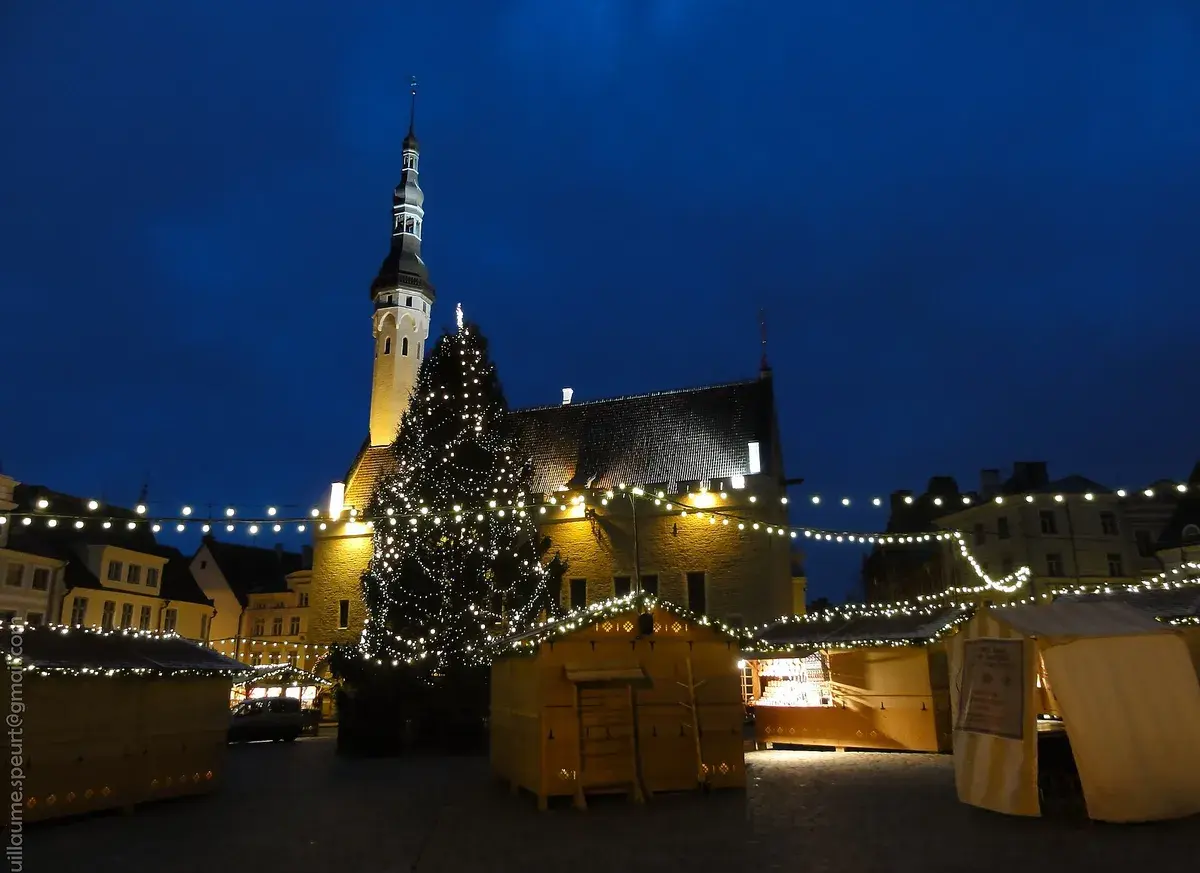
- 🇪🇪 Tallinn: the organiser's 2026 page confirms the deposit system. It says nothing about cards.
Nothing published: carry cash, ask first
- 🇩🇪 Germany: the Cologne, Munich and Nuremberg organiser pages state no payment rule. Cash is the safe answer, as our German markets dates guide also says.
- 🇨🇿 Czechia: Prague publishes nothing on cards. See Prague's markets.
- 🇵🇱 Poland: Krakow's organiser publishes no list of card-taking stalls. See Krakow's market.
- 🇫🇷🇧🇪🇮🇹🇨🇭🇬🇧 France, Belgium, Italy, Switzerland, UK: No organiser statement could be verified. Treat every stall as cash until you see a reader.
Denmark and Sweden are not covered, as nothing could be verified.
🥤 The mug deposit explained
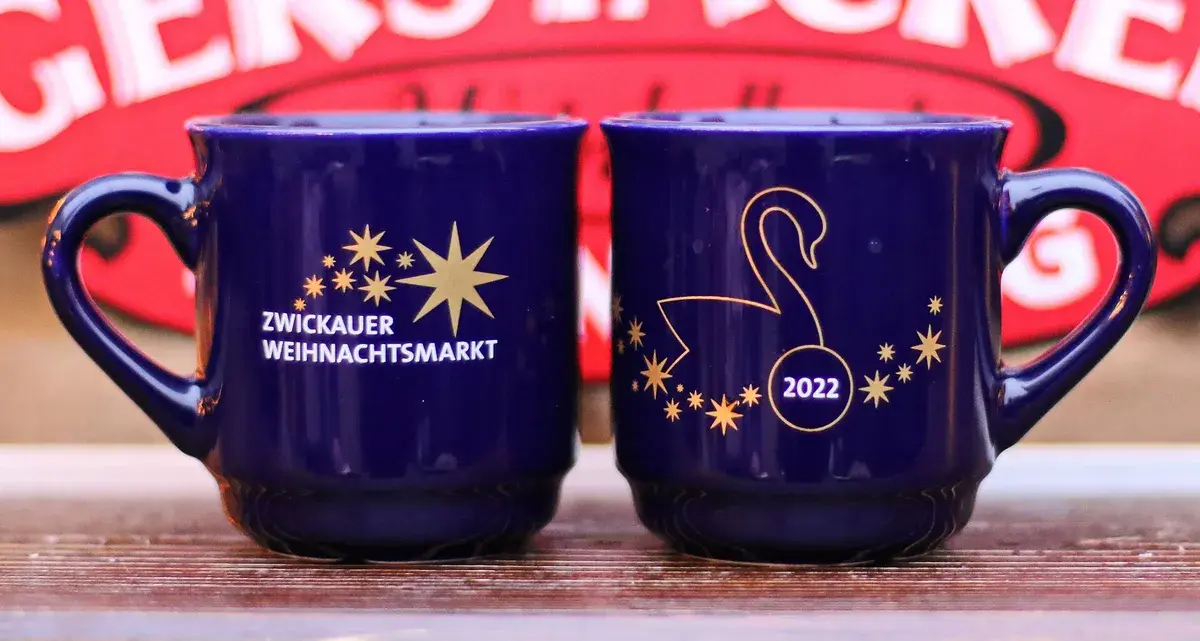
Pfand is German for deposit, the same word as on a bottle. At a market it works like this: you pay for the drink, plus a set amount for the cup, and you get that amount back when you hand the cup in. Keep the cup and you have bought a souvenir. Details differ by market, so the rule that counts is the one on the stall's sign.
What was verified:
- Tallinn, 2026: €2, fully refunded when the tableware goes back to a collection point (organiser page). Note it says collection point, not any stall.
- Vienna, 2026: €5 at the MAGMAG markets, and the 2026 souvenir cup is a red glass boot (our Vienna guide). Prater: €5 for the mug, refunded if returned undamaged, or €2 for an ordinary cup. Rathausplatz: not published.
- Cologne, 2024: €3 for the mug at the Nikolausdorf (regional news, so a guide only). The cathedral market publishes no amount.
- Prague: CZK 50 at Náměstí Míru in 2023 (press). No deposit was reported at the main squares in 2025, where cups are described as recyclable.
- Budapest, Krakow: no deposit published. Vörösmarty gave out ceramic mugs to keep in 2025.
Deposits are the reason to have coins and small notes. They are also why a cup can cost more than the price board suggests: Nikolausdorf's 2024 figures were €4.50 plus €3, so €7.50 at the till.
💶 How much cash per person, per evening
This is an estimate, built from 2025 prices where a source exists. No 2026 prices are published yet. The plan is two hot drinks and one food item, plus any deposit.
- Prague: CZK 100 mulled wine twice plus a CZK 160 sausage is about CZK 360 (around €15). Carry CZK 500.
- Budapest: at the Basilica in 2025, mulled wine at 1,500 Ft twice plus a 2,000 Ft lángos is 5,000 Ft (around €14). Carry 7,000 Ft.
- Krakow: 35 zł for a small mulled wine twice plus a 35 zł żurek is 105 zł (around €24). Carry 150 zł.
- Tallinn: glögi at about €7 twice, a €14 meal, plus €2 deposits on each cup and the plate comes to about €34. Carry €40, and €6 of it comes back.
- Vienna and Germany: two drinks at roughly €5 to €6.50 each (Cologne's cathedral market was €5 in 2025, Vienna's Rathausplatz mulled wine averaged €6.25 in 2024), plus a €3 to €5 deposit, is €13 to €18 before food. No verified food prices exist for these, so add what the board says. €30 a head is a sensible start.
Take a third more than the sum, because second rounds happen. For a cross-check, the Post Office's 2025 barometer put four mulled wines at £22.00 in Krakow and £21.55 in Vienna, against £14.81 in Prague and £14.24 in Budapest. Not sure it is worth the money? See are Christmas markets worth it.
🏧 ATMs and the dynamic conversion trap
Dynamic currency conversion (DCC) is when a terminal or ATM offers to charge you in your home currency instead of the local one. It looks helpful. The rate usually carries a markup for whoever runs the terminal.
The Post Office's travel money guide says to always choose the local currency, at cash machines and on cards. Separately, the EU's Your Europe portal says you must be told about any conversion fee before you agree to the payment. So if a screen asks "pay in pounds or forints?", pick the local currency. The same goes at an ATM.
Practical advice, not a rule: withdraw once for the evening rather than in several small amounts, since each withdrawal can carry a fee.
🤝 Tipping at stalls
No organiser page gives tipping guidance for stalls. Treat it as optional. If you want to leave something, round up in small change.
♻️ What to do with the mug
- Return it if you do not want it, and do it before you leave the market. Do not assume a cup from one market is taken back at another.
- Keep it if you like it. The deposit is then the price of the souvenir.
- Reuse it for your next drink if the stall is happy to refill it. Ask.
- Pack it in a jumper. A glass boot is not something to drop into a rucksack loose.
For gloves you can still pay with, see what to wear at a European Christmas market.
❓ FAQ
Do Christmas markets take card?
Some do, but no organiser guarantees it for all stalls. Card is reported for 2026 only at Vienna's MAGMAG markets and the Prater, per Ciceru's Vienna guide. Carry cash everywhere else.
How much is the mug deposit?
€2 at Tallinn (2026 organiser page). €5 at Vienna's MAGMAG markets, and €5 or €2 at the Prater. Cologne's Nikolausdorf charged €3 in 2024. Many markets publish no figure, so ask at the stall.
Should I pay in my home currency or the local one?
Local. If the terminal offers your home currency, decline it.
Do I have to return the mug?
No. Keep it and you lose the deposit. Return it where the market says to get the money back.
✅ Before you go
Take local currency in small notes and coins, a card as backup, and a phone that works abroad. Check the stall's deposit sign before your first cup, and decline any offer to pay in your own currency.
If you are in Vienna, a self-guided walk in the Ciceru app has a story and a quiz question at each stop, and a free 500 MB global eSIM.