What to Wear at a European Christmas Market: A Practical Packing List
Last updated: September 2026
Intro
Wear a thermal base layer, a wool jumper and a windproof coat, then waterproof boots with thick socks, a hat, and gloves you can keep on while you pay. That works for almost every market in Europe. What changes is how heavy each piece needs to be, and that depends on the city. Below are December averages for eleven cities, checked in September 2026, and a packing list for each temperature band.
A walk keeps you warmer than a queue does. The Vienna Christmas markets walk in the Ciceru app is €7, about 2 hours over 4 km, with a story and a quiz question at each of its 8 stops and a free 500 MB global eSIM. It starts at Rathausplatz.

⚡ Quick answer
- 🧥 Body: three thin layers beat one thick one. Base layer, jumper, windproof coat
- 🥾 Feet: waterproof boots with grip, roomy enough for thick socks. This is where most people fail
- 🧤 Hands: a thin glove you can pay in, with a mitten over it if it is properly cold
- 🌡️ Temperature: December averages run from a 14°C high in Naples to a minus 3°C low in Krakow and Tallinn. Evenings sit nearer the low
- 🎒 Leave behind: the big rucksack, the umbrella, the good shoes
🥶 Why standing cold is different from walking cold
A market is the opposite of exercise. You queue for a drink, stand to drink it, then queue for food. Walking keeps you warm without trying. Standing does not, so the number on your phone stops matching how you feel.
Wind makes it worse. The Met Office says the stronger the wind, the faster the skin cools, and that the UK's wind chill figure is based on heat lost from a bare face at a walking pace of 3 mph. There is no standard figure for standing still in a breezy square, so treat any "feels like" number as generous and add a layer.
This is a rule of thumb, not a measurement: dress for the queue, not the walk. If you feel fine walking to the market, expect to feel the cold once you have stood still for a while.
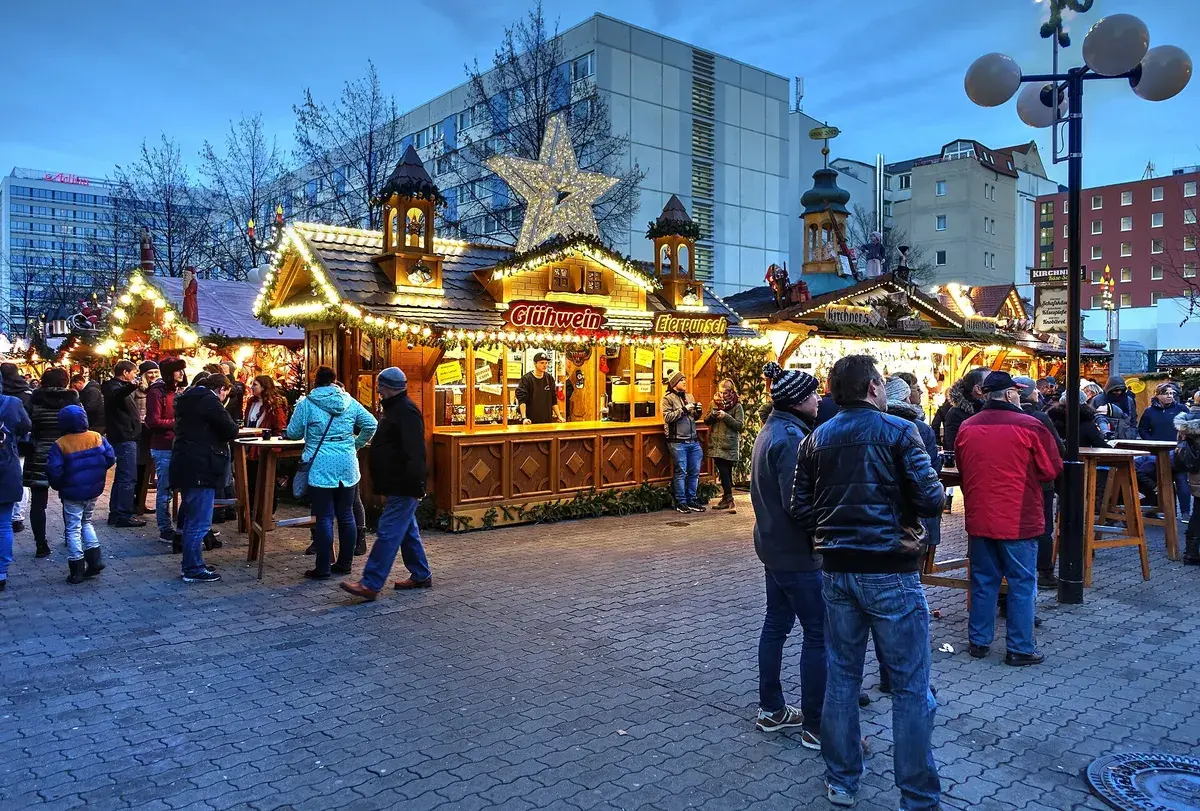
🧅 The layers that matter
- Base: thermal or thin wool, next to the skin. Skip cotton, which stays damp
- Middle: a wool or fleece jumper, the layer you take off when you go inside for a coffee
- Outer: windproof, ideally waterproof, long enough to cover your hips. In Bruges and the Italian cities, waterproof matters more than warm
The NHS advises several loose layers with a waterproof outer, plus a hat and scarf for your head, neck and face. It also lists fingers, toes, nose and ears as the parts most often hit by frostbite. You are unlikely to get frostbite at a market, but the list is a fair map of what to cover first. Pull a scarf over your nose when the wind picks up.
🥾 Feet, the thing everyone gets wrong
You stand on stone for two hours, and the cold comes up through your soles. Trainers, ballet flats and fashion boots fail this test.
- 🧦 Socks: wool or a wool blend. Thick, but not so thick your boots feel tight, because tight boots make toes colder
- 🥾 Boots: thick grippy sole, waterproof. Try them on with the socks you will wear
- 🪨 Grip: old town squares are often cobbled, and wet cobbles are slippery
- 🧦 Spare pair: pack one. Damp socks end an evening early
The NHS names thick socks and boots as the way to protect your feet and toes in the cold. It is the cheapest upgrade you can make.
🧤 Gloves you can still pay with
You will pull out a card, hold a hot cup and balance a plate, often in the same minute. Mittens are warmer than gloves, but you cannot handle a card in them.
- Two pairs: a thin glove worn all the time, a mitten over it. Take the mitten off, not the glove
- Pocket: keep your card in an outer coat pocket you can reach with a glove on
- Free hands: a small cross-body bag leaves one hand for the cup and one for the food
- Payment: a PIN may need a bare fingertip, and some stalls only take cash. See do European Christmas markets take card
🏨 What to leave at the hotel
- 🎒 A big rucksack: you will be turning round in crowds. Take a small bag
- ☂️ A full-size umbrella: a hazard in a packed square. Use a hood and a waterproof coat
- 👞 Good shoes and heels: cobbles, wet stone, food spills
- 🛂 Passport and spare cards: leave them in the safe. Carry one card and some cash
- 🧣 Anything you would hate to get mulled wine on: a white scarf is asking for it
🌡️ December temperatures by city
These are 1991 to 2020 averages for one weather station per city, so they are normals, not a forecast. Tallinn's are direct from the Estonian Environment Agency. The others come from public climate tables built on national weather service data, and the station is often an airport, so the city centre can differ. Use the low as your guide for the evening.
- Naples: high 14.3°C, low 5.9°C
- Rome: high 12.7°C, low 4.7°C
- Florence: high 11.4°C, low 2.6°C
- Bruges: high 7.3°C, low 2.3°C, with rain on about 15 days
- Cologne: high 6.5°C, low 1.0°C
- Strasbourg: high 5.9°C, low 0.8°C
- Prague: high 4.8°C, low 0.6°C
- Vienna: high 4.7°C, low 0.7°C
- Budapest: high 3.5°C, low minus 1.4°C
- Krakow: high 2.7°C, low minus 3.4°C
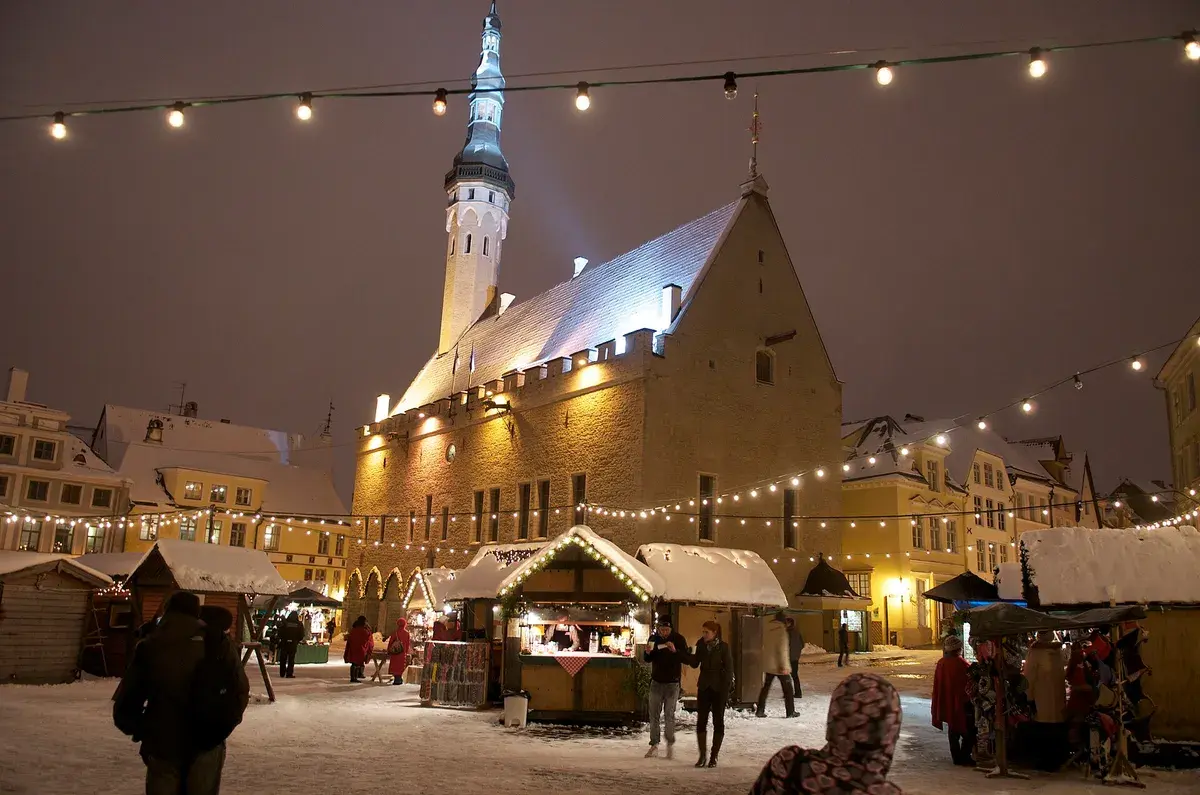
- Tallinn: high 1.2°C, low minus 3.1°C. An average January night there is minus 5.5°C
Late November is milder than January. Tallinn's average November low is minus 0.2°C, so the opening weeks are the gentlest.
📋 A packing list by temperature band
Use the evening temperature, not the midday one.
5°C and above (Naples; Rome, Florence, Bruges and Cologne by day)
- Waterproof coat, one wool or fleece jumper
- Shoes with grip that cope with rain and wet cobbles
- Thin hat and light gloves for when the evening drops
0 to 5°C (Rome, Florence, Prague, Vienna, Strasbourg, Cologne and Bruges in the evening)
- Thermal base layer, jumper, windproof coat
- Waterproof boots with wool socks
- Hat, scarf and thin gloves
Below 0°C (Budapest, Krakow and Tallinn evenings)
- Thermal base layer and leggings, thick jumper, windproof coat
- Insulated waterproof boots, thick wool socks, a spare pair
- A hat that covers your ears, scarf, thin gloves plus mittens
Below minus 5°C (a cold snap in Krakow, Tallinn or Budapest, or January in Tallinn)
- Everything above, plus a second mid-layer
- Boots one size up, so the socks are not squeezed
- Hand warmers in your pockets, and an indoor stop every 30 to 40 minutes
No city on this list averages below minus 5°C in a December evening. That band is for the cold nights you hope not to get.
❓ FAQ
How cold are Christmas markets?
From mild in Italy, with highs of 11°C to 14°C, to below freezing in the evening in Krakow, Tallinn and Budapest. Standing still feels colder than the number on your phone.
What shoes should I wear to a Christmas market?
Waterproof boots with a thick, grippy sole and wool socks. Old town squares are often cobbled and wet, and you stand for a long time.
How many layers do I need?
Three: a thermal or wool base, a jumper and a windproof coat. Add a fourth in Krakow, Tallinn or Budapest.
Can I use my card with gloves on?
Keep the card in an outer pocket and wear a thin glove under your mitten. A PIN may need a bare fingertip, and some stalls take cash only, so check first.
✅ Before you go
Check the evening forecast the day before, pack the boots first, and take a spare pair of socks. Plan an indoor stop after 40 minutes, because no coat fixes a long queue.
For dates, see Christmas markets in Europe 2026: the full opening date calendar. For the cold ones, read the Tallinn and Krakow articles, and for the mild ones, Christmas in Rome, Florence and Naples. In Prague, the Ciceru self-guided walk is €5, 2 hours over 3 km, with a free 500 MB global eSIM.