Christmas Markets: Germany, Austria or Central Europe?
Last updated: September 2026
Intro
Germany, if you can only go once. Austria, if you want markets open on Christmas Day and can pay for it. Czechia, Poland and Hungary, if the budget decides. That is the short answer, checked in September 2026 against organiser and tourist board pages for 2026, plus the Post Office's 2025 price barometer. Dates change the choice more than most guides admit: the big German markets mostly shut by 24 December, Prague and Krakow run to 6 January, and Budapest has not announced 2026 at all. Every city's opening date is in the Europe Christmas markets 2026 calendar.

⚡ Quick answer
- First trip: Germany. Nuremberg and Munich are about an hour apart by train and both run to 24 December
- Budget: Central Europe. In the 2025 barometer, Budapest and Krakow were the cheapest breaks of the five cities compared here, about £664 to £674 for two nights for two, against £926 for Vienna
- Romance: Austria, and Salzburg in particular. It runs 19 November to 1 January and opens on Christmas Day
- Repeat visit: Central Europe, because it is the least like the German markets you have already done
- Trip between Christmas and New Year: Austria or Central Europe. Most German markets are shut by 24 December, with Berlin's Gendarmenmarkt, Düsseldorf's markets and Cologne's harbour market among the exceptions
🎄 Germany: scale and variety
Germany wins on size and on the number of towns worth a visit. The 2026 figures from the organisers and cities:
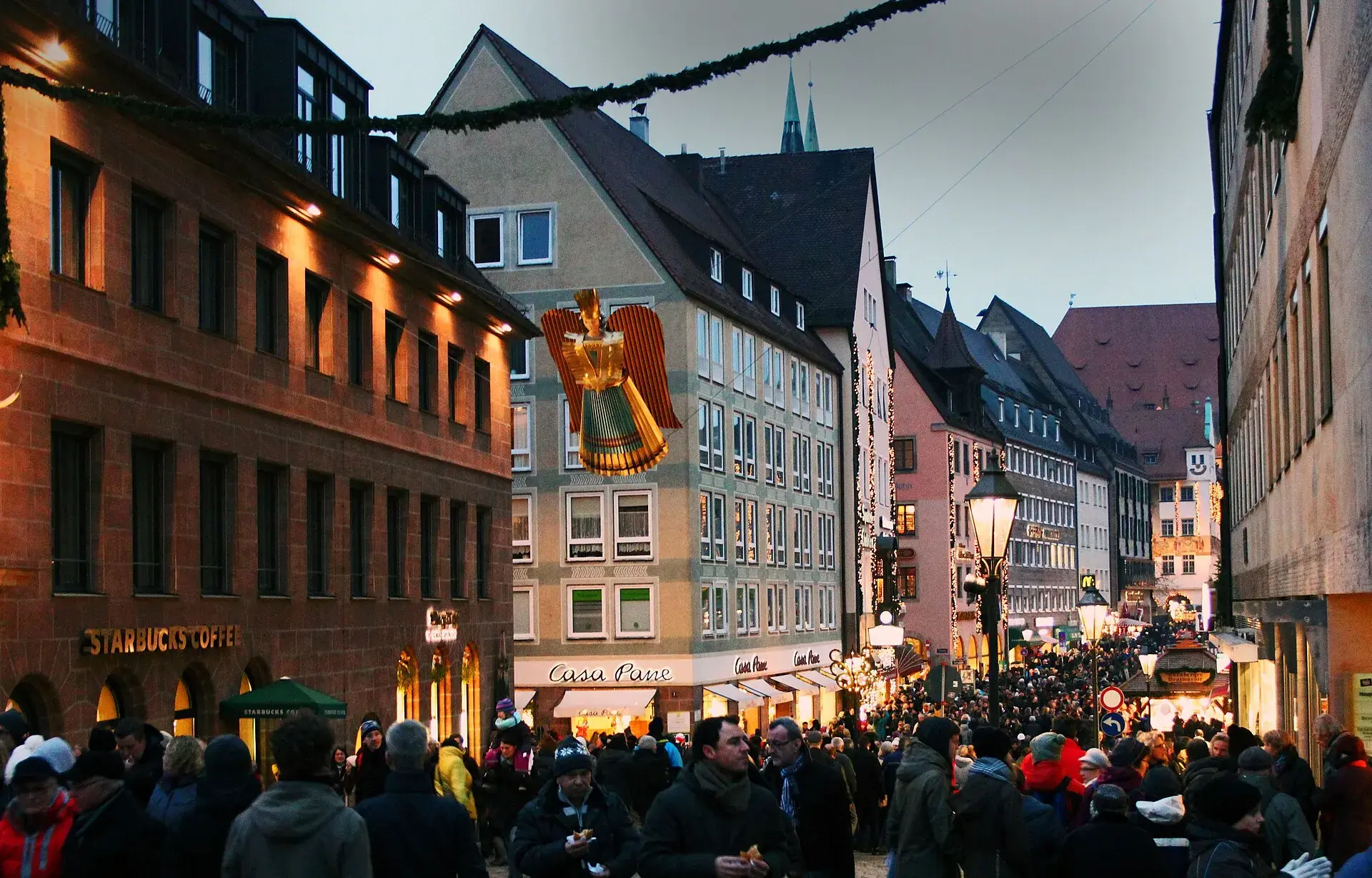
- 📍 Nuremberg: 27 November to 24 December, up to 180 stalls, and more than two million visitors in 2025, according to the city
- 📍 Leipzig: 24 November to 23 December, over 300 stalls, and more than two million visitors in 2025, half of them from outside the city, per the tourist board
- 📍 Dresden: the 592nd Striezelmarkt, 25 November to 24 December, more than 200 traders
- 📍 Munich: 20 November to 24 December, 137 stalls. The city says this is longer than in past years
- 📍 Cologne: the cathedral market runs 16 November to 23 December, with the harbour market to 3 January 2027. Details are in Cologne Christmas markets 2026
Compare Prague's Old Town Square, listed with 82 vendors in 2025. Nuremberg, Dresden and Leipzig list 180, 200 and 300 stalls, and there are 14 cities to pick from. The full list is in German Christmas markets 2026: dates for all 14 cities.
What is different about German markets in 2026
- Totensonntag. Sunday 22 November is a day of remembrance. Rothenburg, Trier, Düsseldorf and Cologne's cathedral market are closed. Aachen opens only from 18:00 to 21:00
- Early closure. Most end on 22, 23 or 24 December. Nuremberg, Dresden and Munich shut on 24 December after 14:00
- Exceptions. Berlin's Gendarmenmarkt runs 23 November to 31 December, with a €2 entry fee (free for under 12s), and Düsseldorf's markets run 19 November to 30 December. In Cologne the harbour market runs to 3 January 2027, and the Heinzel market on Heumarkt to 10 January
- Cologne cathedral now charges. Going inside costs €12 from 1 July 2026. The market outside is free
⛪ Austria: atmosphere and price
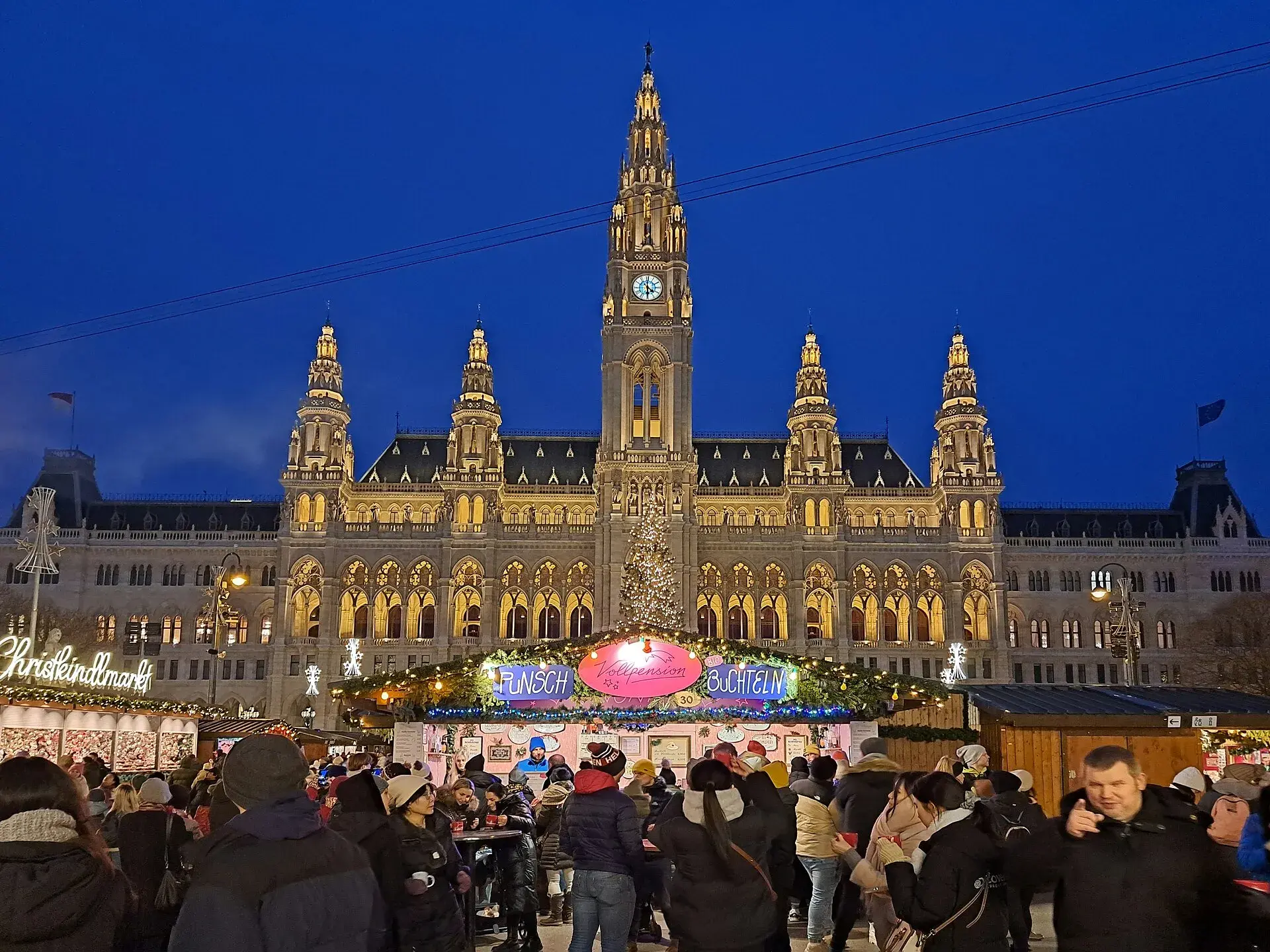
Austria has fewer big-name markets, and it takes better care of the days around Christmas. Vienna's tourist board lists more than a dozen markets for 2026, and Rathausplatz runs 13 November to 26 December, daily 10:00 to 22:00. Schönbrunn (6 November to 6 January 2027) and the Prater Wintermarkt (20 November to 6 January 2027) are two that stay open on 27 December. Vienna Christmas markets 2026: what stays open has the hours.
Salzburg is the pick for a couple. The Christkindlmarkt on Dom- und Residenzplatz runs 19 November to 1 January 2027, and the organiser says it draws almost a million visitors a year. Opening hours are 09:00 to 15:00 on 24 December and 11:00 to 18:00 on 25 and 26 December. Innsbruck's old town market runs 13 November to 23 December, Graz's 20 November to 23 December.
The price is where Austria loses. Vienna was the second most expensive of 15 cities in the 2025 barometer. Punch at Rathausplatz averaged €6.50 in a 2024 press test, with a €5 mug deposit.
For Vienna against Prague head to head, see Vienna or Prague for Christmas markets.
💶 Czechia, Poland and Hungary: cost
Here is the like-for-like data. The Post Office Christmas Markets Barometer 2025 priced a two-night break for two from UK airports: flights, B&B, airport transfers, two evening meals, coffee, four mulled wines and four market cakes. Prices come from tourist offices, with exchange rates from 6 November 2025.
The whole break, for two
- Vienna: £926
- Prague: £901
- Berlin: £692
- Krakow: £674
- Budapest: £664
Everything except flights and B&B
- Vienna: £325
- Krakow: £233
- Budapest: £222
- Berlin: £202
- Prague: £197
Four mulled wines
- Krakow: £22.00
- Vienna: £21.55
- Berlin: £17.96
- Prague: £14.81
- Budapest: £14.24
Three things stand out. Prague is the cheapest place to spend money once you land, but its flights and B&B (£704) cost more than Vienna's (£601) in this sample, so the total is nearly as high. Krakow's whole break is cheap while its mulled wine is not: a small one was 35 zł (about €8) in 2025, per the PAP news agency. Berlin is the only German city in the barometer, and it is a capital, so it tells you little about Nuremberg or Leipzig. It does show Germany is not automatically the expensive option.
Local prices, all 2025 and approximate in euros:
- Prague: mulled wine CZK 100 (about €4), sausage CZK 160 (about €6.50), at Old Town Square and Wenceslas Square
- Budapest: mulled wine 1,500 to 1,900 Ft (about €4.10 to €5.20), plus a fixed-price dish at 1,600 Ft (about €4.40) at the main food stalls in 2024 and 2025
- Germany: the magazine Reisereporter's 2025 survey put mulled wine at €3.50 to €4 in Dortmund, Frankfurt and Heidelberg, €4.50 to €5 in Nuremberg and Leipzig, and €5 to €6 in Munich and Berlin
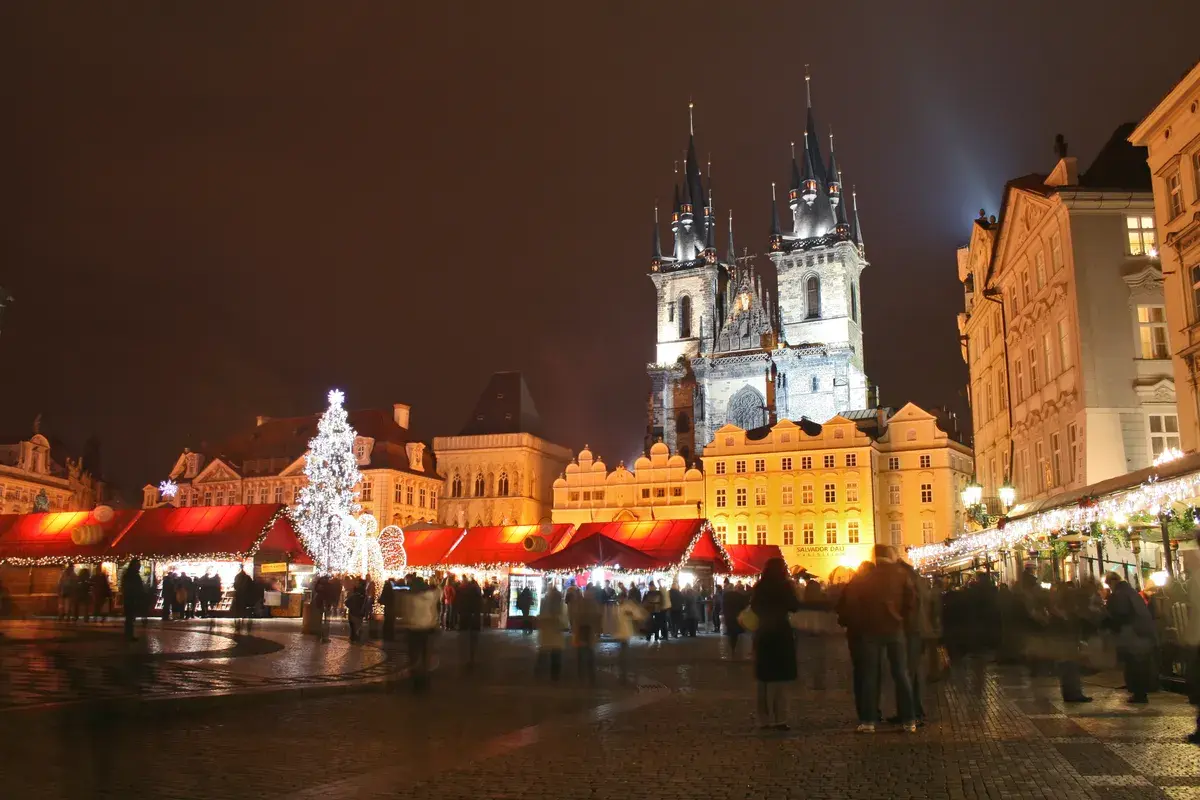
Budapest has not announced 2026 dates. Prague's are set: Old Town Square and Wenceslas Square open 28 November and run to 6 January 2027. Krakow's are 27 November to 6 January, though one organiser page says the end could be 3 January. For each, see Prague Christmas markets 2026Budapest Christmas markets 2026 and Krakow Christmas market 2026. Warsaw has a new site for 2026, Plac Defilad under the Palace of Culture, 20 November to 6 January.
🍽️ Food compared
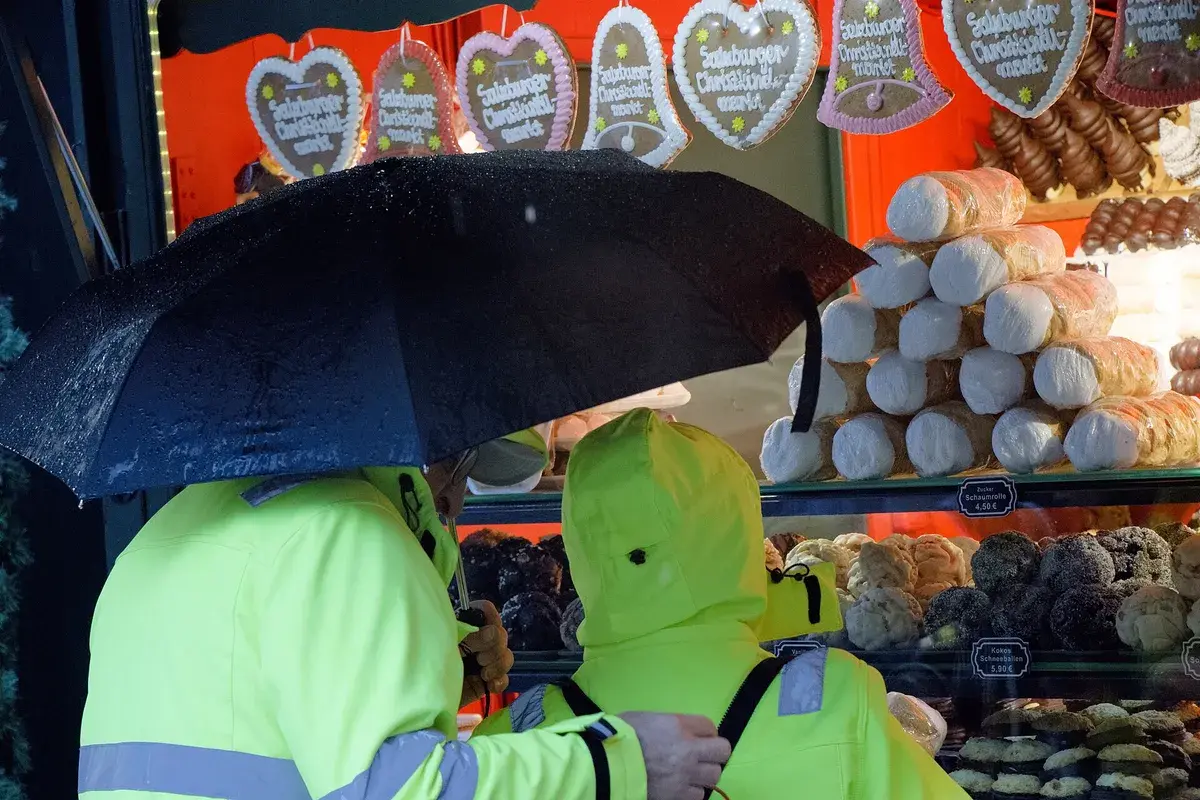
Germany: bratwurst and gingerbread in Nuremberg, according to the city's own market summary, and Stollen in Dresden, where the Striezelmarkt is named after a cake sold there and hosts a Stollen festival on Advent weekends. Cologne adds Reibekuchen, the potato fritters. Mulled wine is €4 to €6 depending on the city.
Austria: punch, and a deposit that is mostly €5. The Vienna markets run by MAGMAG serve it in a red glass boot for €5. At the Prater, a mug is €5 or an ordinary cup €2.
Central Europe: the best food per euro. Budapest's fixed-price dish is the standout. In Prague, grilled sausage is the filling buy, and trdelník is the one to skip. Krakow does grilled oscypek, a smoked sheep's cheese, which was 17 zł (about €3.90) in 2024.
Deposits vary by market, city and year, so the one rule is to ask. Sourced amounts: Vienna €5, Spittelberg €3 (2024); Cologne's Nikolausdorf €3 (2024); Prague's Náměstí Míru CZK 50 (2023). Budapest and Krakow have none published. See do European Christmas markets take card for the cash rules.
👥 Crowds compared
Only some countries publish visitor numbers. Germany's are large: Nuremberg and Leipzig each reported more than two million in 2025. Salzburg's single market draws almost a million a year, against Vienna's spread across a dozen or more. For Prague, Krakow and Budapest, no first-party visitor counts are published, so any claim about them is judgement.
Ciceru's view: Germany's big names get the heaviest weekend crowds, because their season is short. Nuremberg opens on 27 November and shuts on 24 December, so it has four Advent weekends: 27 to 29 November, 4 to 6, 11 to 13 and 18 to 20 December. Prague's Old Town Square starts on 28 November and has the tree, so it is the busiest of Prague's markets.
Local visitor advice for Cologne is Tuesday to Thursday before noon for space. In Ciceru's view, midweek and the first week beat an Advent Saturday anywhere. Are Christmas markets worth it goes into the crowd and price question.
🚆 Getting between markets
Germany: the dense network is the reason to go. Nuremberg to Munich by ICE takes about 1 hour 10 to 1 hour 25. Check today's timetable on bahn.de.
Austria: Vienna to Salzburg is about 2 hours 20 to 2 hours 50 by ÖBB Railjet, and the private Westbahn takes about 2 hours 30. Through Railjet trains also link Munich, Salzburg, Vienna and Budapest.
Central Europe: it is not a network. Prague, Krakow and Budapest are in three countries, so a trip like this is one city per trip, or a train hop through Vienna. Railjets run from Vienna to Prague and on to Dresden and Berlin. Check the Prague to Krakow journey time before you plan around it.
Fares vary by date and how early you book. Advent weekends in Europe has three-city routes for the four 2026 weekends.
📅 Dates side by side
- Munich: 20 November to 24 December
- Nuremberg: 27 November to 24 December
- Dresden: 25 November to 24 December
- Vienna Rathausplatz: 13 November to 26 December
- Salzburg: 19 November to 1 January 2027
- Prague Old Town Square: 28 November to 6 January 2027
- Krakow: 27 November to 6 January 2027, provisional end
- Budapest: not announced. Last year it ran 14 November 2025 to 1 January 2026
🧭 Which for a first trip, which for a repeat
First trip: Germany. It is the biggest choice: a market of 180 to 300 stalls, then another city an hour away. Go to Nuremberg and Munich, or Cologne if you want the cathedral.
Budget: Central Europe. Pick Krakow if you need dates now, Budapest if you can wait for the announcement, and Prague if you have already found a cheap flight.
Romance: Austria. Salzburg over Vienna, unless you want the larger market. The Christmas Day opening is the practical reason.
Repeat visit: Central Europe. Different food, later opening dates and a market that runs into January. If you loved Germany and want more, try the smaller towns: Rothenburg has 61 stalls, and Trier, Regensburg and Bamberg have 2026 dates in the German dates guide.
❓ FAQ
Which country has the best Christmas markets?
Germany for a first visit, on size and variety. Austria for atmosphere and Christmas Day opening, Central Europe for cost.
Are German or Austrian Christmas markets cheaper?
German, on the 2025 numbers. Berlin's two-night break for two was £692 against £926 for Vienna, and four mulled wines were £17.96 against £21.55. Berlin is the only German city in the barometer, so treat it as a guide.
Which Christmas markets are open on Christmas Day?
In Austria, Vienna's Rathausplatz (it runs to 26 December) and Salzburg's Christkindlmarkt, which is open 11:00 to 18:00. In Prague, Old Town Square is open 12:00 to 22:00 on 25 December, per Czech Tourism's listing. Most German markets are shut, though Berlin's Gendarmenmarkt runs to 31 December, so check its 25 December hours.
Do all Christmas markets charge entry?
No. Most are free to enter. Berlin's Gendarmenmarkt charges €2 in 2026, free for under 12s. Prague, Krakow and Budapest's two big markets list no entry charge.
✅ Before you go
Pick by dates first, then by budget. Recheck the 2026 dates on the organiser pages in late October, and Budapest as soon as it publishes. Every price above marked 2024 or 2025 is last year's, kept as a guide.
If you end up in Prague, Krakow or Budapest, each has a self-guided walk in the Ciceru app, with a story and a quiz question at each stop and a free 500 MB global eSIM: Prague is €5, Krakow €5 and Budapest €7. For what to put on, see what to wear at a European Christmas marketand for a shorter list of favourites, 5 best Christmas markets in Europe for 2026.